Most coffee tables are bought backward. Someone falls for a walnut rectangle online, measures nothing, and then discovers the corners block the walkway and the sofa feels too far away. This coffee table size guide gives you the measurements I use on living room jobs before anybody orders furniture. The goal is simple: a table that fits the room, leaves a usable path, and sits close enough to the sofa for a drink without becoming a shin-bashing obstacle.
Start with the sofa, not the table
Measure the sofa first. Write down its full outside length, seat height, arm height, and depth. A coffee table usually works best at about two-thirds the length of the sofa. For an 84-inch sofa, start by looking at tables around 52 to 60 inches long. A 48-inch table can work in a tighter room, but it can look undersized if the sofa is large and deep.
The table should also sit roughly level with the sofa seat or a little lower. A common target is 16 to 18 inches high, while many sofas have seats around 18 to 20 inches high. If the table is much taller than the cushions, people reach downward awkwardly and the room starts feeling like a waiting area. If it is too low, kids, dogs, and adults will eventually use it as a footrest.
Sectionals require more care. Measure from the inside corner to the end of each seating run, then consider a square table or an oversized rectangle. A 36-by-36-inch square often works in front of a compact L-shaped sectional. Larger sectionals may handle 42-by-42 inches, but only if the surrounding clearance survives.

Leave room for legs and traffic
The coffee table size guide measurement people skip is clearance. Leave about 14 to 18 inches between the front edge of the sofa and the table. Fourteen inches is comfortable for most adults reaching for a mug. Eighteen inches gives you more knee room and makes the room easier to clean. Once you get past about 20 inches, the table starts feeling disconnected from the seating.
You also need a walking route around the furniture. Aim for at least 24 inches for a normal passage and closer to 30 or 36 inches where people regularly walk between the sofa, hallway, kitchen, or front door. In a narrow living room, the table may technically fit while the room still fails in daily use. That is a layout problem, not a furniture problem.
Use painter's tape on the floor to mark the table footprint. Leave the tape in place for a full day. Walk around it carrying laundry, vacuum the rug, open the recliner, and let the kids pass through. A cardboard box cut to the proposed size works even better. If your hip hits the corner during the test, it will not somehow improve after you spend $600 on the table.
Match the shape to the room
Rectangular tables are the safest choice for a standard sofa. They follow the sofa's line, provide a useful surface, and usually leave clean traffic paths. In a 10-by-12-foot living room, a table around 48 to 54 inches long and 24 to 30 inches wide is often a sensible starting point.
Square tables suit sectionals and large seating groups because everyone gets similar access. They need a room with enough open floor around them, though. A 42-inch square can consume more space than its numbers suggest because every corner reaches into a different path.
Round and oval tables are useful when you have tight walkways, small children, or a sofa facing two chairs. The missing corners reduce the number of bruised knees. A 36- to 42-inch round table can work in a smaller seating area, provided the diameter does not crowd the sofa. Oval tables give you some of the length of a rectangle without four sharp corners.
This is where the coffee table size guide needs a reality check: shape changes how the room functions. Do not choose round simply because the room is small. A round table that is too wide still blocks the room, and a tiny round table can leave two people reaching across empty space.
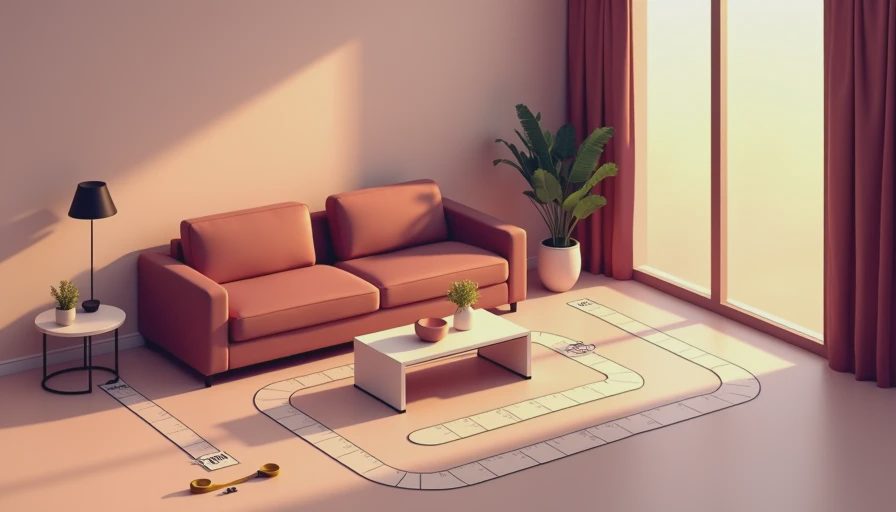
Measure the rug and the baseboards
The table does not live by itself. It sits on a rug, near baseboards, vents, lamps, and sometimes a fireplace hearth. The rug should extend under at least the front legs of the sofa and chairs. If the rug is too small, the coffee table can look stranded in the center. For a seating group with an 84-inch sofa, an 8-by-10-foot rug is often more workable than a 5-by-8, especially when chairs are included.
Check the HVAC register before buying a solid-sided table. In many San Antonio houses, floor vents land exactly where furniture wants to go. Blocking one can reduce airflow and create an annoying hot or cold corner. Choose an open-leg design, shift the layout, or use a vent deflector rather than pretending the grille is decorative.
Then inspect the wall trim and hearth. A table that leaves 30 inches around the sofa may still interfere with a fireplace screen or cabinet door. Measure from the actual obstruction, not from the wall behind it.
Choose height, materials, and storage by use
A lift-top table is useful when the living room doubles as a work area, but the mechanism adds weight and another part that can fail. Cheap lift tops wobble, pinch fingers, and lose alignment. If you buy one, test the hinge action and make sure the raised top does not collide with the sofa or a person sitting across from it.
Storage depends on what you actually leave out. A lower shelf is handy for baskets, controllers, and books, but it collects dust and invites children to climb. Drawers hide clutter more effectively, while a solid trunk-style table can hold blankets but is harder to reach from every seat. Glass tops make a room feel less crowded, yet they show fingerprints and do not mix well with toddlers.
For a busy household, I usually favor rounded wood edges, a stable base, and a finish that can take a damp cloth. Veneer is not automatically bad; well-made veneer can outlast poorly sealed solid wood. What matters is the edge construction, the hardware, and whether the legs wobble when you push the table sideways.
A quick ordering checklist
Before you click Buy Now, run the numbers from this coffee table size guide one more time. Measure the sofa length and confirm the table is near two-thirds of it. Check that the height is at or slightly below the seat. Mark the proposed length and width with tape, then measure 14 to 18 inches from the sofa and at least 24 inches through the main walking route.
Measure doorways, stair turns, elevator interiors, and the narrowest point between the entry and living room. I have watched a homeowner order a beautiful 60-inch table that could not make the turn at the bottom of the stairs. Furniture delivery companies can sometimes remove a door, but that is an extra charge and a bad afternoon.
Finally, check the return policy, shipping box dimensions, assembly requirements, and finish samples. A table priced at $250 can become a $400 mistake after freight and return fees. Spend ten minutes with a tape measure first. That is cheaper than learning your coffee table is the reason nobody can walk through the room.


No comments yet — be the first to share a thought.