The sectional vs sofa decision looks simple until the delivery truck is in your driveway and the furniture will not clear the front door. I have watched homeowners measure the room three times, then forget the stair landing, hallway turn, or the 32-inch doorway. The right choice depends less on what looks good in a catalog and more on how the room carries people, air, light, and daily mess.
Start with the room, not the furniture
For the sectional vs sofa question, begin with a floor plan. Measure the wall lengths, doorway widths, ceiling height, window locations, HVAC vents, and the path from the entry door to the living room. Mark those measurements with painter's tape on the floor. A 110-inch sectional can look reasonable on paper and still make a 12-by-15-foot room feel blocked once you add a coffee table and a walkway.
A sofa usually gives you more control. A standard three-seat sofa is commonly 80 to 90 inches wide, and you can place two chairs across from it or angle one toward a window. That arrangement costs more pieces, but it lets you change the layout later. A sectional is one large decision. Its long side and return side establish the room's traffic pattern immediately.
Leave roughly 30 to 36 inches for a main walking path. Keep furniture from covering floor registers, return-air grilles, and electrical access panels. In older San Antonio houses, those vents are not always where a furniture showroom assumes they will be. Blocking one can make a room uncomfortable and force the HVAC system to work harder.
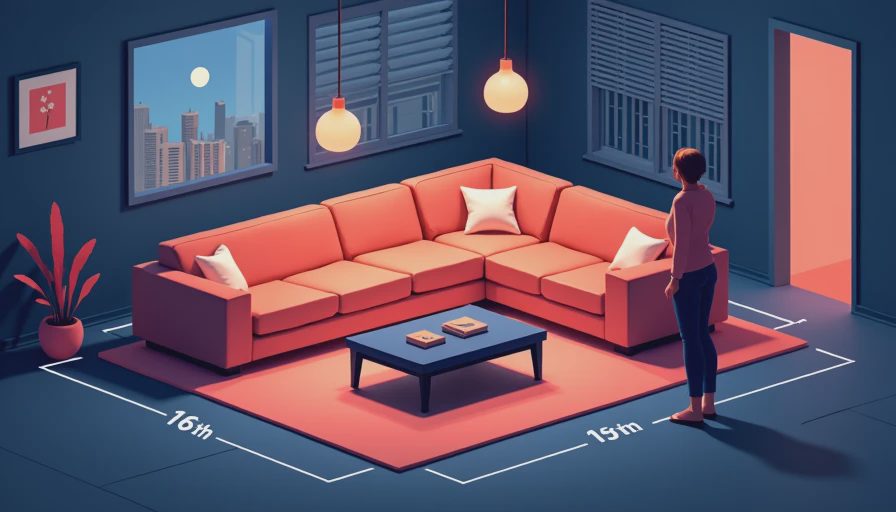
When a sectional earns its floor space
A sectional makes sense when the household actually sits together. If four people watch movies, play games, or pile onto the furniture with a dog, the sectional vs sofa comparison often favors the sectional. The chaise provides a place to stretch out, while the connected seats prevent the awkward gap that forms between a sofa and a separate ottoman.
It also works well in a wide great room where the back of the sectional can define the living area without building a wall. I have used an L-shaped sectional to separate a television zone from a dining area in open plans. That is useful, but the back must look finished because everyone will see it. Cheap fabric stapled over a thin frame will show every shortcut.
Pay attention to the corner seat. A deep corner can be comfortable for one person but nearly useless for normal sitting. Check seat depth, cushion firmness, and back height in person. If the seat is 25 inches deep and nobody in the house is tall, you may spend every evening with a pillow behind your back. A decent sectional often costs $1,500 to $4,000, with performance fabric, upgraded cushions, and a sleeper mechanism pushing the price higher.
Why a sofa can be the smarter buy
The strongest argument in the sectional vs sofa debate is flexibility. A sofa can move when you replace the television, open a doorway, add a desk, or sell the house. Two lighter chairs can move to a bedroom or office later. That matters in a starter home, especially when the living room may serve as a playroom one year and a work area the next.
A sofa also arrives in more manageable pieces. Many sectionals come apart, but the largest component still has to pass through the house. Measure the shipping carton, not just the assembled frame. Ask whether the legs come off, whether the back is removable, and whether the delivery crew will carry it upstairs. A $2,000 purchase can become a bad afternoon if the crew leaves it in the garage because the stair turn is too tight.
For a moderate-size room, a quality sofa in the $900 to $2,500 range paired with two chairs can provide better support and a longer useful life than a bargain sectional. Look underneath the furniture. Kiln-dried hardwood or a solid plywood frame, properly attached corner blocks, and reinforced joints matter more than a fancy name. Sit down hard, shift sideways, and listen for creaks before paying.

Comfort, cleaning, and the people who live there
The sectional vs sofa choice should follow your household's habits. A formal sitting room can handle a shallower sofa with upright cushions. A family room needs fabric that can survive crumbs, muddy socks, and a drink knocked over during the fourth quarter. Removable cushion covers help, but check the care label. Some covers are not designed for a hot dryer and shrink enough to make reassembly miserable.
Leather is easy to wipe and can last for years, but it shows scratches and feels hot in a sunny room. Polyester performance fabrics generally handle daily abuse better than delicate linen blends. Avoid buying a very pale seat if nobody will use a throw blanket or enforce a no-food rule. That rule usually lasts until the first family movie night.
If someone in the house has mobility trouble, seat height matters. A low, deep sectional may look inviting but can be hard to stand from. Measure from the floor to the top of the seat cushion, and test the arm height. A firm sofa around 18 to 20 inches at the seat is often easier to use than a soft, sinking model.
Delivery is part of the purchase
In the sectional vs sofa decision, delivery deserves the same attention as fabric and price. Walk the route with a tape measure. Include the porch gate, front door, interior doors, stair width, ceiling height, and the tightest corner. Take photos of problem areas and send them to the retailer before ordering.
Do not assume a delivery company will remove doors, lift over railings, or disassemble a window. Some will offer those services for an added charge; others will not. Protect hardwood and newly finished floors before the truck arrives. Felt pads are not enough for dragging a heavy frame across a floor, and one gouge can cost more to repair than premium delivery.
For a sectional, confirm whether the chaise is on the left or right when you face it. Retailers describe orientation differently, and a misunderstood diagram can put the return directly across your walkway. If your layout may change, choose a reversible chaise or modular pieces, but verify that the connectors hold tight and do not rattle.
My practical buying test
The best sectional vs sofa answer comes from a full-size layout, not a showroom photograph. Tape the proposed footprint on the floor for at least one evening. Put a dining chair where the main seat will be, place a cardboard box at the coffee table edge, and walk through the room carrying a laundry basket. If someone has to turn sideways, the furniture is too large.
Then check the television distance, glare from windows, sight lines to the front door, and access to every vent. A sectional that faces the wrong direction can force the television onto an awkward wall and make every seat uncomfortable. A sofa and two chairs often win when the room has multiple doors or must serve more than one purpose.
Before you buy, write down the exact width, depth, seat height, delivery dimensions, fabric cleaning code, warranty terms, and return fees. Take that sheet to two or three retailers, including local furniture stores and larger chains such as Ashley or Rooms To Go. Prices and construction vary by model, so compare the frame and cushions instead of trusting the showroom label.
For most homeowners, the sectional is the better tool when the room is wide, the household lounges together, and the traffic path is clear. The sofa is the safer choice when flexibility, easier delivery, and future rearranging matter more. Measure first, tape the footprint, and buy the piece that fits the house you actually live in—not the imaginary room in the catalog.



No comments yet — be the first to share a thought.