Most home renovation ideas living room searches start with paint colors and sofas. That is backwards. The floor, walls, lighting, airflow, and furniture clearances decide whether the room works. I have seen homeowners spend $8,000 on furniture before discovering the floor slopes toward the fireplace and the only usable outlet is behind the television. Start with the bones, then finish the room.
Start with the floor and walls
Before ordering anything, walk the room slowly. Look for soft spots, squeaks, cracked grout, ceiling stains, loose trim, and doors that rub. In a San Antonio house built in the 1990s, a squeaky area may be a loose subfloor panel, not a charming sign of age. A contractor can usually inspect accessible framing and subfloor conditions before demolition. Repairing a small section might cost $300 to $900. Replacing damaged flooring across the room can run $2,500 to $7,000, depending on material and labor.
If you are replacing carpet, do not automatically choose luxury vinyl plank because it is popular. Good LVP handles kids, pets, and spilled drinks, but poor installation over an uneven subfloor creates hollow spots and separated joints. Midrange products from brands such as CoreLuxe or Lifeproof commonly land around $4 to $8 per square foot installed. Engineered wood costs more, often $8 to $15 installed, and needs better moisture control. Tile is durable but unforgiving under bare feet and expensive to remove later.
Walls deserve the same inspection. A drywall seam that looks fine in daylight can show every defect under a new wall sconce. I have repaired rooms where the painter was blamed for waves caused by unshimmed studs. Fixing and skim-coating walls may add $1,000 to $3,000, but it is cheaper than staring at bad shadows for ten years. Paint comes after electrical work, not before it.

Fix lighting, outlets, and airflow before finishes
A living room usually needs more than one ceiling fixture in the center. Plan general lighting, reading light, and television lighting separately. Recessed LEDs can work well when the ceiling has enough access, but they are not a cure for every dark room. Four to six selectable-color-temperature fixtures may cost $400 to $1,200 installed. Add dimmers that match the LED bulbs; incompatible dimmers often cause flickering.
Map the outlets before closing the walls. A television wall may need power, cable or internet access, and a low-voltage path for speakers. Put outlets where the furniture will actually sit, including one beside each end of a sofa. If a floor lamp will cross a walkway, the outlet plan is already wrong. Adding a new circuit for media equipment may cost $700 to $1,500, especially when the panel is far from the room.
Airflow is less exciting than a new mantel, but it controls comfort. Do not block a supply vent with a sectional or place a return grille behind a bookcase. In hot San Antonio summers, a room with poor circulation can feel warm even when the thermostat says the house is comfortable. Relocating a vent is a mechanical job, not a weekend decoration project. Get the duct path settled before drywall and flooring.
Build the layout around real traffic
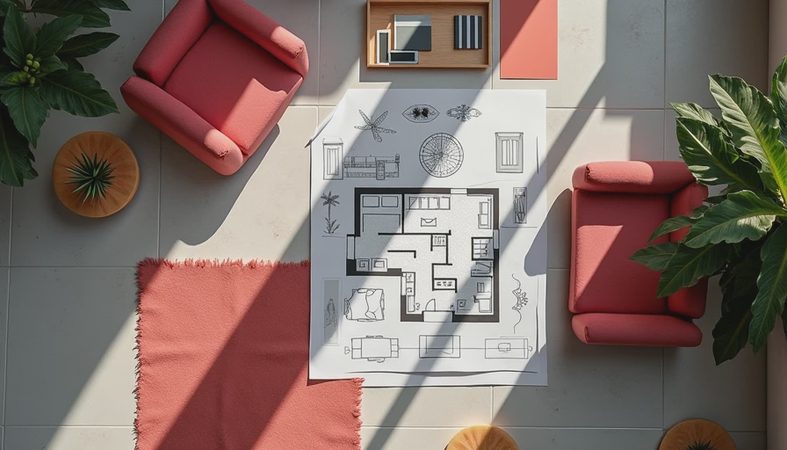
Measure the room, then measure every doorway, stair turn, and hallway. Write the dimensions on a simple floor plan. Leave roughly 30 to 36 inches for the main walking path, and keep the front legs of large furniture on the rug when possible. These are practical targets, not laws, but they prevent the cramped arrangement I see after a sectional delivery.
The biggest mistake in home renovation ideas living room planning is choosing a sofa before testing the traffic pattern. A deep sectional can look comfortable online and become a wall-to-wall obstacle in person. Many standard sofas measure about 84 inches wide and 36 to 40 inches deep. Some sectionals run beyond 120 inches wide. Use painter's tape on the floor to mark the outline for two days. Walk around it while carrying laundry, opening doors, and helping a child find a lost toy.
The television should be placed where windows will not create glare, but do not mount it so high that everyone watches with a sore neck. A low console is often more comfortable than a fireplace-mounted screen. If the fireplace is the natural focal point, consider placing the television on a perpendicular wall instead of forcing every chair to face both features.

Choose durable materials before decorative pieces
A living room has to survive feet, food, sunlight, and furniture movement. For a busy household, I usually prefer a tightly woven performance fabric over delicate linen. Crypton and Revolution fabrics are useful because many versions resist stains, but no fabric is magic. Ask for a real cleaning code and test a sample with the kind of spill your household actually creates.
Rug size matters more than pattern. An 8-by-10 rug often works in a modest living room, while a 9-by-12 may be better for a larger seating group. A rug that only touches the coffee table looks undersized and slides around. Use a proper pad underneath; the cheap mesh pads frequently crumble or leave marks on finished floors. For a television room, a low-pile wool blend or quality synthetic is easier to vacuum than a thick shag.
Window coverings should be selected after measuring the sun, not just the window frame. South- and west-facing glass can fade wood floors and upholstery. A lined shade, woven shade with a blackout liner, or full drapery can protect the room and reduce afternoon heat. Mounting drapery hardware into a stud or proper anchor matters. A loose curtain rod becomes a repair call when a child pulls on it.
Set a realistic budget and sequence
For a moderate San Antonio living room renovation, a cosmetic refresh may run $3,000 to $8,000. That can include paint, lighting changes, trim repairs, a rug, and one strong furniture upgrade. A more involved project with new flooring, drywall repairs, electrical changes, built-ins, and furniture commonly reaches $12,000 to $30,000. Moving walls, replacing windows, or repairing structural damage pushes the number higher.
Spend first on problems that are expensive to redo: subfloor repairs, electrical locations, ductwork, window flashing, and wall preparation. Save money on replaceable items such as side tables, lamps, and accent chairs. A $350 lamp can be changed next year. A poorly placed outlet requires dust, patching, paint, and another service call.
The correct order is demolition, structural and subfloor repairs, framing, electrical and HVAC changes, drywall, primer and paint, flooring, trim, lighting trim-out, and furniture. Some flooring manufacturers recommend installing floors before cabinets or built-ins, while others require specific expansion gaps. Follow the product instructions instead of relying on a shortcut from a friend.
My practical checklist before ordering
Use these home renovation ideas living room steps before spending a dollar on furniture. Photograph every wall and outlet. Measure the room, doors, stairs, and ceiling height. Mark windows and vents on graph paper. Test the proposed sofa and rug footprint with painter's tape. Check where afternoon sun lands. Confirm that the television, lamps, chargers, and speakers have power. Order flooring samples and look at them in morning, afternoon, and evening light.
Then price three versions of the project: minimum repair, comfortable upgrade, and full renovation. Add at least 10 percent for surprises, especially in older homes. Do not let a showroom push you into a sofa that cannot clear the front door. Ask for the packaged dimensions, not only the finished dimensions.
Good home renovation ideas living room decisions are not about copying a photograph. They are about making the floor solid, the lights useful, the air moving, the paths clear, and the furniture fit the people who live there. Get those pieces right, and the paint color becomes the easy part.


No comments yet — be the first to share a thought.