The right area rug size for living room furniture is not a guess you make from a product photo. It starts with the room's actual dimensions, door swings, sofa depth, and walking paths. I have watched homeowners spend $600 on a rug that looked acceptable online, then discover it floated in the middle of the room like a postage stamp. Measure first. Shop second.
A rug has a job beyond covering bare flooring. It ties the seating area together, protects hardwood from grit, softens sound, and gives every chair a clear place to land. But the rug cannot fix a bad furniture layout. If the sofa blocks a vent or the coffee table leaves only 22 inches for traffic, changing the rug will not save the room.
Start with the room, not the rug listing
Before looking at colors or patterns, measure the usable floor area. Do not measure from wall to wall and assume every inch is available. Subtract built-in cabinets, fireplace hearths, radiators, floor vents, and the clearance needed for doors. In a typical 12-by-16-foot living room, the usable seating zone might be closer to 10 by 13 feet once those obstacles are accounted for.
Use painter's tape to mark the outside edges of possible rugs. Start with an 8-by-10-foot rectangle, then try a 9-by-12-foot rectangle if the room can handle it. Leave roughly 12 to 18 inches of visible flooring around the rug when possible. That border helps the room look intentional and keeps the rug from crowding baseboards. In a small apartment, 8 by 10 can be the practical limit. In a large open-plan room, a 5-by-7 rug usually looks undersized unless it sits under a single accent chair.
This test takes ten minutes and can save the cost of return shipping, a rug pad, and several hours of dragging furniture around. Mark the rug perimeter, then walk the room as you normally do. If your feet keep landing on the tape, the planned size is interfering with traffic.

Match the rug to the furniture footprint
For most living rooms, the best area rug size for living room seating is large enough for at least the front legs of the sofa and chairs to sit on it. This is the reliable middle ground. The rug connects the pieces without demanding a giant custom size.
A 5-by-7-foot rug generally works under a coffee table with one small chair, but it is rarely enough for a full sofa-and-chair arrangement. An 8-by-10-foot rug usually works with a standard sofa, coffee table, and two occasional chairs. The front legs of the sofa should sit about 6 to 12 inches onto the rug, not perch right at the edge. A 9-by-12-foot rug gives you room for the entire sofa and chairs, which is often the better choice in a 12-by-18-foot room or a broad open floor plan.
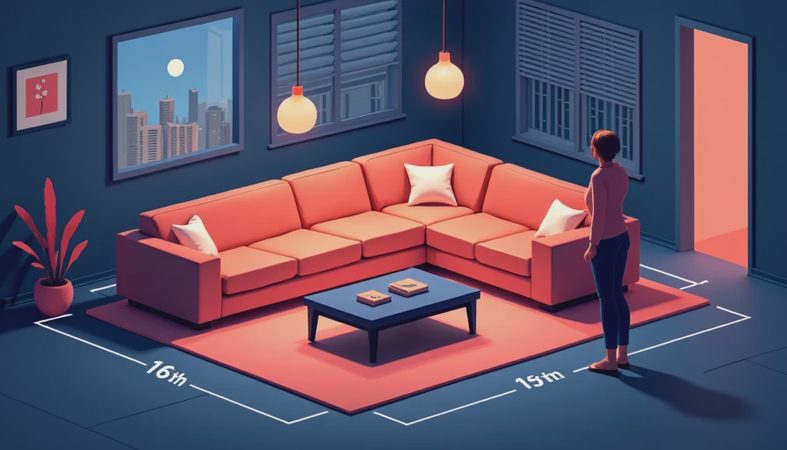
If you are furnishing around a sectional, measure the full outside dimensions, including the chaise. An 8-by-10 may work with a compact L-shaped sectional, but a deep sectional often needs 9 by 12 or larger. The goal is not to cover every inch of floor. The goal is to keep the seating group on one surface so it does not look like separate furniture islands.
The coffee table and clearance rules matter
The coffee table should sit fully on the rug or fully off it. A table with two legs on and two legs off rocks, catches feet, and makes the arrangement look accidental. With an 8-by-10 rug, center the coffee table first, then position the sofa and chairs around it.
Leave about 14 to 18 inches between the coffee table and the sofa for comfortable legroom. Around the outside of the furniture, aim for at least 24 inches of walking space. Main pathways should be closer to 30 or 36 inches when the room allows it, especially if children, pets, or older adults use the space. Do not sacrifice a clear route to the kitchen just to make the rug look bigger.
I once walked a renovation where a homeowner had pushed a sofa nearly against the coffee table because the rug was too short. The rug itself was attractive and well made, but the 5-by-7 size forced every other measurement to fail. Replacing it with an 8-by-10 solved the layout without moving the walls, lighting, or television.

Account for doors, vents, and real household abuse
A rug can look perfect on a floor plan and fail in daily use. Check every door near the living room. A thick rug and pad can stop a closet door from opening or make a front door scrape. Measure the door's swing with the rug tape in place.
Keep floor vents accessible. Covering a supply register can restrict airflow, while covering a return grille can affect how the HVAC system moves air. Cutouts are possible, but they often look rough and make vacuuming harder. Moving a vent during a renovation can cost roughly $150 to $400 depending on access, so plan the rug before the flooring and trim are finished.
For a family room, choose a low-pile or tightly woven rug that accepts regular vacuuming. Wool is durable and repairs well, but it can cost several hundred dollars more than polyester or polypropylene. Polypropylene handles spills and sun better than many inexpensive natural fibers. Avoid a shag rug under a dining-style coffee table if crumbs, toy parts, and pet hair are part of normal life.
A buying checklist that prevents expensive mistakes
Measure the sofa, sectional, chairs, and coffee table before ordering. Write down the full furniture footprint, then add the desired rug overlap. For an 84-inch sofa, a rug that is only 60 inches wide cannot reach both sides of the seating. Confirm the retailer's listed dimensions; a product labeled 8 by 10 may measure slightly less after binding.
Buy a rug pad sized just inside the rug edges. A pad that sticks out becomes a trip hazard, while no pad at all lets the rug slide and wear against the floor. On hardwood, use a pad labeled safe for finished wood. On tile, a denser nonslip pad usually performs better than a thin mesh sheet.
Order samples when color is difficult to judge. Natural light, LED bulbs, and nearby flooring can change how a rug reads. Put the sample beside the sofa and view it in the morning and evening. If the room has strong Texas sun, rotate the rug occasionally and use window coverings to reduce uneven fading.
The practical answer for most homes
For a standard living room with one sofa, two chairs, and a coffee table, the area rug size for living room layouts is usually 8 by 10 feet. Move to 9 by 12 when the room is large, the furniture is deep, or you want all seating fully on the rug. Use 5 by 7 only for a compact arrangement where the rug clearly fits the intended zone.
Tape the options on the floor, protect the traffic paths, and check the doors and vents before spending money. That small bit of site work beats discovering after delivery that your expensive rug is too short, your closet will not open, and everyone has to walk around the furniture to reach the kitchen.


No comments yet — be the first to share a thought.