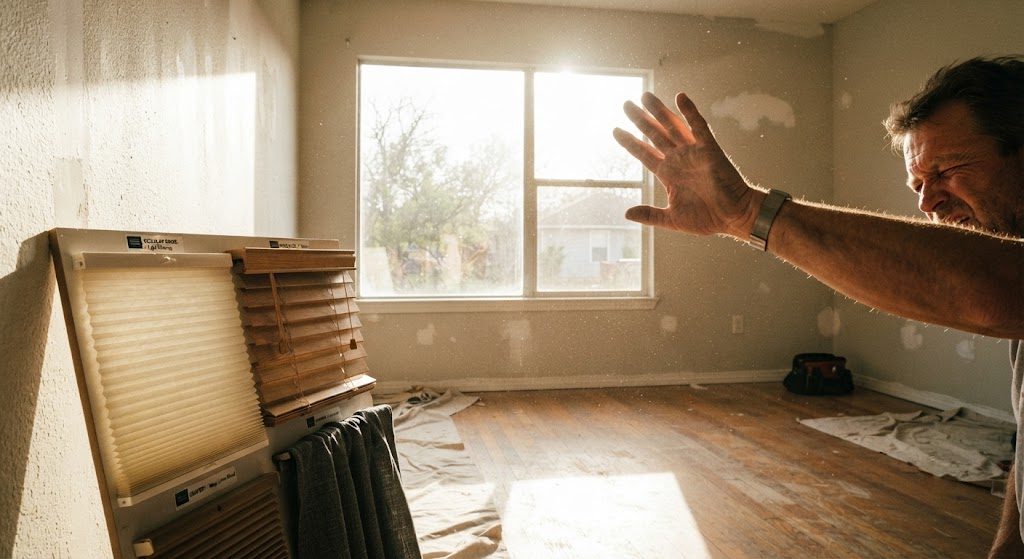
I’ve stood in living rooms in San Antonio in the middle of August where you could feel the heat radiating off the window glass from six feet away. The homeowner had a beautiful linen Roman shade pulled down — looked great on Instagram — but the room was ten degrees hotter than the hallway. That shade was doing nothing. It was a decoration, not a solution.
Your living room has a sun problem. Every living room does, just in different ways depending on which direction your windows face and where you live. The fix isn't one product. It's a strategy — and it starts with knowing what you're actually fighting.
Know Your Enemy: South, East, West, and North Windows
South-Facing Windows
In Texas, south-facing windows get direct, high-angle sun all day, all year. In summer, that glass turns into a radiant heater. In winter, the lower sun angle shoots glare straight into your TV and your eyes. You need heat rejection in the summer and glare control in the winter, sometimes both at once. That's a tall order for a single window treatment.
West-Facing Windows
These are the worst. From about 3 PM until sunset, a west-facing window delivers low, brutal, direct sun that overheats a room fast. I've measured temperature differences of fifteen degrees between the window side and the interior wall side of a living room with uncovered west-facing glass. Any furniture in that sun path is getting cooked.
East-Facing Windows
Morning sun, less intense, gone by noon. East windows are the easiest to manage. You mainly need privacy and a little light filtering for the early hours.
North-Facing Windows
No direct sun, just steady ambient light all day. These rooms tend to be darker and cooler. Your problem here isn't heat or glare — it's gloom. You want to maximize natural light without giving the neighbors a show.
The Three-Layer System That Actually Works
One window treatment almost never solves the whole problem. I tell clients to think in layers, and I spec it the same way I spec a lighting plan.
Layer One: The Workhorse (Solar Heat and Glare Control)
This is your first line of defense. Cellular shades — the honeycomb kind — are the best heat blockers I've installed. They trap air in the cells and create a thermal break between the glass and the room. Get them with a reflective backing on the window side and you've got real heat rejection.
Solar shades — the screen-like rollers — cut glare without blocking your view. They're great for west- and south-facing windows where you still want to see outside. But they don't do much for insulation. Pick the openness factor based on how much light you want to keep: 5% for max glare control, 10% for a balance of view and protection.
Layer Two: Light Filtering and Privacy
This is the soft layer — the drapes, the Roman shades, the linen panels that look good and give you control over who sees in. I hang these on a separate rod or a double rod bracket, mounted wider than the window and high enough to stack off the glass. They're not your heat fighters, but they're what makes the room feel finished.
The mistake I see everywhere: people buy blackout curtains thinking they'll solve heat and light in one shot. Blackout curtains block light, sure, but they also block the view and make the room feel like a bunker. Use them sparingly — media rooms, bedrooms — not as the default for every window.
Layer Three: Exterior Protection (The One Nobody Wants to Do)
If you've got a west-facing window that's cooking your living room every afternoon, the most effective fix is outside the house. Exterior solar screens, awnings, or even a strategically planted tree block the heat before it ever hits the glass. I've installed retractable exterior screens on two jobs where the client was ready to replace their HVAC system because the living room wouldn't cool down. The screens fixed it for a fraction of the cost.
What I Put on My Own Windows
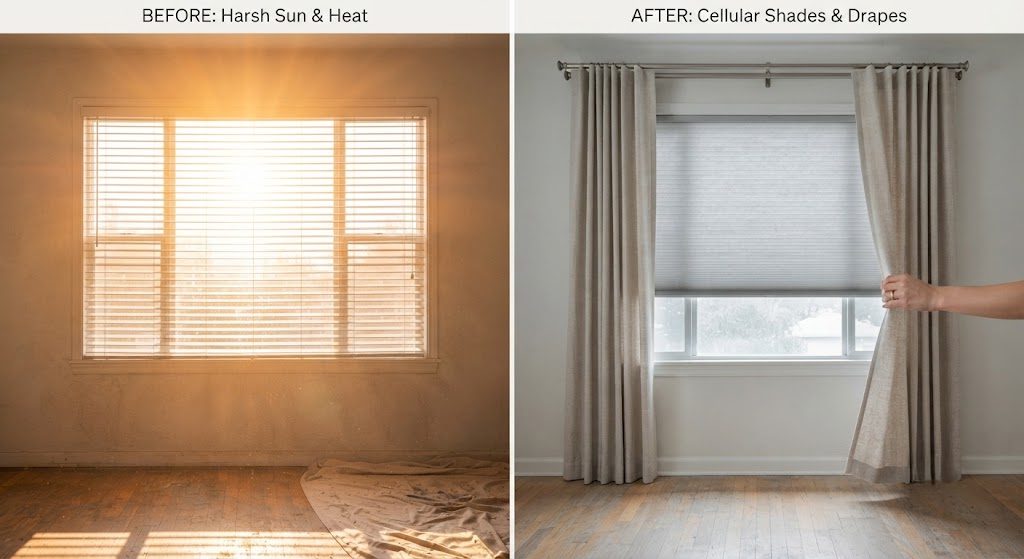
My living room has two south-facing windows and one west-facing. On the south windows, I hung cellular shades with a reflective backing, plus simple linen-look drapes on a double rod for light filtering and privacy. On the west window, I added an exterior solar screen. Total cost was around six hundred dollars, and my living room stays ten degrees cooler in August than it did the first summer we lived here with nothing but builder-grade blinds.
Window treatments aren't where you express your design personality. They're where you control your climate, protect your furniture, and make the room livable at 4 PM in July. Get the strategy right first. Then pick a color.
No comments yet — be the first to share a thought.