Floor rugs for living room spaces are not just decoration. They cover hard flooring, cut down echo, give furniture a defined footprint, and make a cold tile or scratched-up wood floor easier to live with. I have watched homeowners spend $2,000 on a rug that looked good online, then drag it to the garage six months later because the corners curled and the sofa crushed the pile flat. Buy the right size and construction first. Worry about the pattern after that.
Start with the room and furniture measurements
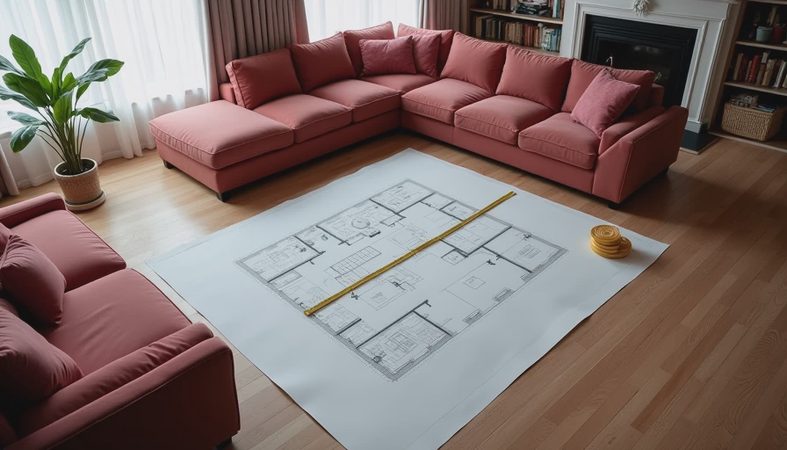
Measure the seating area before you shop. In most living rooms, an 8-by-10-foot rug is the practical starting point for a sofa, coffee table, and two chairs. A 9-by-12 works better when the room is wide enough for the front legs of every seat to sit on the rug. That front-leg rule matters because it ties the furniture together instead of leaving each piece stranded around the coffee table.
For a smaller apartment or narrow room, a 5-by-8 rug can work under the coffee table with the sofa just outside the rug edge. It will not cover the entire seating arrangement, but it is better than forcing a 9-by-12 into a walkway. Leave roughly 18 to 24 inches of visible floor around the rug when the room allows it. Do not block a floor register, door swing, or the path people use to reach the kitchen.
Tape the proposed dimensions on the floor before ordering. Use painter's tape, then place a dining chair or moving box at each corner. Walk around the layout at night and during the day. A rug that looks centered from the sofa can be crooked against the fireplace or pinch a hallway by two inches.
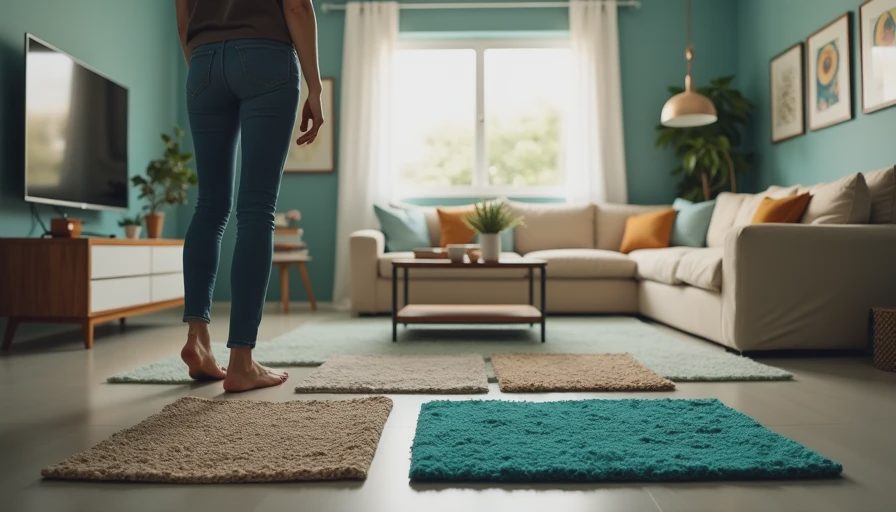
Pick a fiber based on what happens in your house
Wool is the dependable choice. A well-made wool rug handles heavy foot traffic, resists crushing better than many synthetics, and can last for years with routine vacuuming. It also costs more. For an 8-by-10, expect about $500 to $2,000 for a useful wool option, with handmade rugs running higher. Shedding during the first several months is normal; aggressive beater-bar vacuuming is not.
Polypropylene is the budget workhorse. It resists many common spills, cleans fairly easily, and often costs $150 to $600 for an 8-by-10. It is a sensible choice for kids, pets, rental homes, and a living room that opens directly to a dusty patio. The tradeoff is that cheap polypropylene can flatten quickly in a main traffic lane and may look shiny under strong sunlight.
Nylon usually gives you better resilience than basic polyester. Polyester can offer strong color and a soft hand at a lower price, but it is more likely to show crushed paths under a heavily used sofa or recliner. Cotton flatweaves are easy to move and wash in some smaller sizes, but they slide and wrinkle unless the pad underneath is doing its job.
Jute and other plant fibers have a rougher surface and can shed. They are a poor match for crawling babies, pets with sensitive paws, or anyone who wants a soft place to sit on the floor. Floor rugs for living room use should match the household, not just the room photo that convinced you to buy them.
The rug pad is part of the purchase
A rug without a pad is a cheap job disguised as a complete job. The pad keeps the rug from creeping, protects the flooring from grit, reduces wear, and makes a thin rug feel less like a towel thrown over the floor. Use a non-slip pad made for your floor type, and buy it slightly smaller than the rug so it does not show at the edges.
For wood flooring, avoid a rubber product that can stain or trap moisture unless the manufacturer specifically approves it. A felt-and-rubber pad is often a good general solution because felt adds cushioning while the backing grips. On tile, a thinner non-slip pad can prevent bunching without making the edges too high. Test the entry edge with your bare foot. If your toe catches, the pad or rug needs a lower profile.
Do not tape down every corner as a permanent fix. Tape collects dust, can leave adhesive, and hides the fact that the rug is undersized or the floor is uneven. If a corner still curls after the rug has relaxed, reverse-roll it carefully and weight it with books for a day or two.
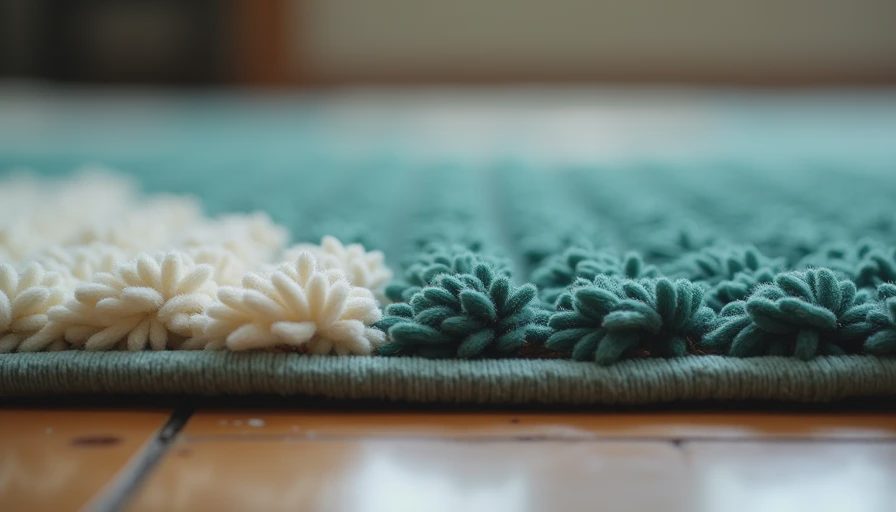
Check pile height, doors, and cleaning access
High pile feels comfortable, but it is harder to vacuum and more likely to interfere with doors. Measure the rug and pad together, then check the bottom clearance of the living room door, nearby closet doors, and cabinet doors. I have seen a homeowner install a thick rug over luxury vinyl plank, only to discover that the hallway door scraped across it every time someone opened it.
For most working living rooms, a low pile or medium pile is easier to maintain. A vacuum can reach the base, chair legs do not sink as deeply, and dropped toys are easier to find. Shag rugs hide crumbs until they become a science project. If you choose one anyway, confirm that your vacuum can handle it without pulling loops or stalling.
Use the care label as a maintenance plan, not decoration. Blot spills with a clean towel; do not scrub wine or muddy water deeper into the fibers. Shake small rugs outdoors when practical, vacuum both directions, and rotate the rug every few months if sunlight hits one side. Professional cleaning can cost roughly $100 to $300 depending on size and material, so factor that into a bargain purchase.
Match the rug to real traffic patterns
Put the rug where feet actually land. The route from the front door to the kitchen needs a surface that can handle grit, while the area beside a recliner needs a pad that will not slide when someone stands up. Keep the rug edge out of the main walking lane when possible. A corner that catches one person's shoe every day will eventually curl, tear, or send somebody into the coffee table.
In a San Antonio house, dust and fine outdoor grit are constant maintenance issues. Shoes, pets, and open doors bring that grit inside, and grit acts like sandpaper under a rug. Vacuum the hard floor before laying down floor rugs for living room areas, and lift the rug occasionally to clean underneath. This matters even more over finished wood, where trapped grit can leave dull tracks.
If the living room receives strong afternoon sun, avoid assuming a dark rug will look the same forever. Rotate it and use window shades during the brightest hours. A patterned rug usually hides ordinary wear better than a solid, pale one, but no pattern fixes poor construction.
What I would buy at three budgets
Under $250, look for a machine-made polypropylene rug from a retailer with clear return shipping terms. Stay with a low or medium pile and spend $40 to $100 on a proper pad. This is the sensible range for a first apartment, playroom, or temporary furniture arrangement.
From $250 to $800, you can find better-density polypropylene, nylon, or entry-level wool in common 8-by-10 sizes. Brands such as Ruggable, Loloi, Safavieh, and Rugs USA offer different construction types, so read whether the product is a washable cover, a tufted rug, or a flatwoven piece. Those terms affect feel and maintenance more than the product photography does.
At $800 and above, inspect the fiber, backing, knot or weave quality, and return policy. A genuine wool rug can justify the cost in a busy room, but only if the size fits and the pad is included in your budget. Do not buy an expensive rug to compensate for furniture that is still in the wrong layout.
The best floor rugs for living room projects are sized correctly, anchored with a real pad, and chosen for the abuse your household delivers. Tape the layout, check the doors, measure the furniture, and spend money on fiber and construction before chasing a name or pattern. That sequence prevents the most common mistake: buying the pretty rug first and discovering that the room, floor, and daily traffic had other plans.

No comments yet — be the first to share a thought.