A good living room rug layout is not about copying a photograph from a furniture catalog. It is about making the sofa, chairs, coffee table, doors, vents, and walking paths work together without creating a trip hazard. I have watched homeowners spend $1,200 on a rug, then shove it under a sofa because nobody measured the room first. The rug was not the problem. The order of operations was.
Start with the room itself. Measure the wall lengths, note every door swing, locate floor vents, and mark where the main traffic crosses the floor. Then measure the furniture you already own. If you are buying new pieces, use painter's tape to mark their footprints before ordering anything. Tape costs a few dollars. Returning a 9-by-12-foot rug or a sectional that blocks the hallway costs much more.
Choose the rug size before you choose the pattern
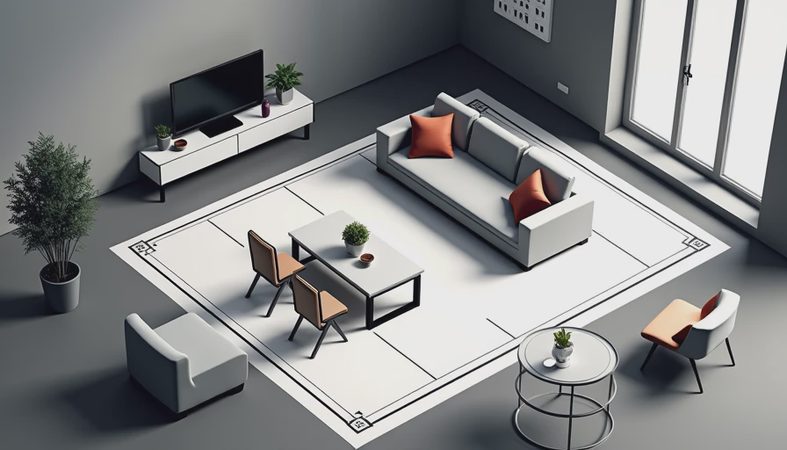
Most living rooms need a rug large enough to connect the seating, not a small island floating in front of the sofa. In a compact room, a 5-by-8-foot rug can work if the front legs of the sofa and chairs sit on it. For an average 12-by-16-foot living room, an 8-by-10-foot rug is usually the safer starting point. Larger rooms often need a 9-by-12-foot rug so the entire seating group has a stable base.
The common mistake in a living room rug layout is buying a 5-by-7-foot rug because it is cheaper, then placing only the coffee table on it. That arrangement cuts the furniture apart. The sofa appears disconnected, the chairs drift toward the walls, and the rug becomes something everyone has to step around. If an 8-by-10-foot wool rug costs $600 to $1,500, that is real money, but replacing a too-small rug after installation is worse.
For a tight budget, place the rug with the front legs of the sofa and chairs on its edge. Do not force all four legs onto the rug if the room cannot support it. The important thing is that the seating touches the same surface and the coffee table sits fully on the rug. That gives the room a usable center without wasting money on a size that crowds the walls.
Leave breathing room at the walls and doors
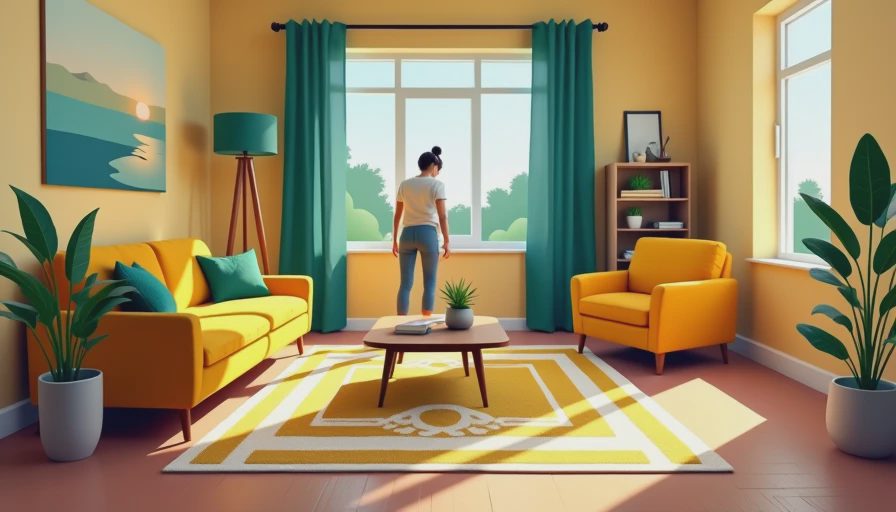
A living room rug layout should usually leave about 8 to 18 inches of visible floor between the rug and the walls. This is not a sacred design rule; it is a practical way to keep the rug from bunching against baseboards and make vacuuming possible. In a small room, less exposed floor is acceptable. What matters is that the rug does not run under a door where the door slab catches it.
Check the door swing with the rug in place. Interior doors often have only a small amount of clearance, especially after a thicker pad is added. A low-pile rug and a thin felt-and-rubber pad are safer near doors than a thick shag. If the rug sits under a hinged door, open and close the door several times before you commit. I have seen a beautiful rug trimmed after installation because the bedroom door could no longer open.
Keep at least 30 to 36 inches for the main walking path when the room allows it. You do not need a ruler for every inch, but you do need to walk the route with a laundry basket, a vacuum, or a child moving through the room. A layout that looks fine from the sofa can fail when someone carries a drink toward the kitchen.
Match the layout to the furniture arrangement
The best living room rug layout depends on how the room is used. A sofa facing a television usually needs the rug centered on the sofa and screen, not automatically centered on the window. If a fireplace is the room's anchor, align the rug and coffee table with the fireplace while keeping the seating square enough for conversation. These are small adjustments, but they prevent furniture from looking crooked every time you sit down.
For a sofa and two chairs, center the coffee table on the seating group, then place the rug underneath that whole group. The front legs of the chairs should not sit six inches outside the rug while the sofa is buried deep on it. That uneven edge makes the furniture feel scattered. For an L-shaped sectional, a 9-by-12-foot rug often works better than a smaller rectangle because the long side and chaise need a consistent anchor.
Do not push every piece against the walls just because the room has open floor in the middle. Pulling the sofa forward 6 to 12 inches can create a cleaner path behind it, but first check outlets, floor vents, and the television cable. A rug can hide a cord, but it cannot fix a badly placed outlet or a blocked return-air grille.

Deal with vents, uneven floors, and rug pads
Floor vents are where an attractive living room rug layout can become a maintenance problem. Never cover a supply vent with a heavy rug and furniture unless the register is designed to work through the covering. Restricted airflow can reduce comfort and put extra strain on the HVAC system. If the vent falls under the planned seating group, use a vent cover that allows airflow through the rug or shift the rug so the opening remains clear.
Check the floor before placing anything. On older homes, a low spot in the subfloor can make the rug ripple, while a high transition at tile or hardwood can catch the edge. A quality pad helps prevent sliding and adds a little cushion, but it will not flatten a bad floor. Fix the floor transition first. A $40 to $100 pad is cheap insurance against curled edges, especially in homes with pets or young children.
Pad material matters. Felt pads feel substantial on hardwood, while rubber-backed pads grip better on smooth tile. Avoid a pad that leaves residue or stains the floor finish. For engineered wood, follow the flooring manufacturer's guidance because some rubber products can discolor the surface over time.
Make the placement work for real life
A living room rug layout has to survive more than a staged photo. Leave enough clearance for recliners to open, cabinet doors to swing, and a robot vacuum to reach the edges. If you have a dog that runs from the hallway, avoid a rug corner positioned directly in its path. Use rug tape or a proper pad rather than hoping the furniture weight will stop movement.
In a house with kids, low-pile polypropylene is often easier to clean than high-pile wool. Wool feels better underfoot and can last for years, but food spills need prompt attention. In San Antonio, where dust and outdoor grit come in quickly, a vacuum-friendly weave usually beats a deep shag. Choose the material based on traffic, not the product label.
Before ordering, mark the proposed size with tape for at least one full day. Sit in every seat, walk from the entry to the kitchen, open nearby doors, and move the coffee table. If the taped outline makes the room feel cramped, go smaller or change the furniture arrangement. If it leaves the seating disconnected, go larger. This simple test catches most mistakes before your credit card does.
A final measurement checklist
Measure the sofa width and depth, then measure the distance between the seating and the coffee table. Leave roughly 14 to 18 inches between the sofa and table for comfortable legroom, adjusting for children or recliners. Confirm the rug will not cover a vent, block a door, or hide a floor transition that needs repair.
Then check the room from standing height. The living room rug layout should guide your eye toward the seating area, not create a crooked strip that points at a wall. Centering does not always mean using the room's exact geometric center. It means aligning the rug with the furniture people actually use.
If you are still unsure, buy from a seller with a clear return policy and keep the packaging until the taped test and furniture trial are complete. Spending another evening measuring is cheaper than living with a rug that curls, slides, blocks a door, or makes the entire room feel undersized.

No comments yet — be the first to share a thought.