If you're shopping for floor lamps for living room use, don't start with style. Start with where the dark corners are, where the couch sits, and how much light you need to read without squinting. In a real house, the right lamp fixes a bad corner, softens a TV wall, and keeps you from running every ceiling light just to watch a game.
Start with the room, not the catalog
I look at the sun path first. In a San Antonio living room with west-facing windows, the afternoon glare will wash out a screen long before the lamp matters. In a north-facing room, the problem is the opposite: the space feels flat by 7 p.m. That is why the lamp is a tool before it is a decoration. A good one fills the dead zone beside a sofa, lights a chair for reading, and keeps the room from feeling like a tunnel after dark. If your room has one center ceiling light and a sectional shoved against two walls, you already know why that matters.
What floor lamps for living room spaces need to do
The best ones do one job well. An adjustable reading lamp with a small shade belongs next to an armchair. A torchiere throws light up and bounces it off the ceiling, which helps when you want softer room light without a bright bulb in your face. An arc lamp reaches over a sectional, but it needs real weight in the base or it will lean like it is trying to leave. I usually see decent lamps in the $60 to $180 range. Below that, the base gets flimsy fast. Above that, you are paying for finish and design, not always better light.
When I buy these for a client or for my own house, I look at the switch, the cord, and the shade before I care about the finish. A lamp that looks good in a warehouse store and tips over when the vacuum bumps it is a bad buy. IKEA, Target, Home Depot, Lamps Plus, and Costco all carry versions that can work. The trick is not the store. The trick is matching the lamp to the job.
Height, bulb choice, and glare
Height matters more than most people think. For a reading lamp, the bottom of the shade should land roughly at eye level when you are seated, or a little above it. For a torchiere, you want the light aimed at the ceiling and a bulb bright enough to help, not so harsh that the room feels like a waiting room. I like warm white LEDs in the 2700K to 3000K range for living spaces. A 700 to 1,200 lumen bulb covers most jobs, and a dimmable bulb or dimmer switch gives you room to adjust when the TV is on. Philips and GE both make common LED bulbs that do this job just fine.
If the shade throws a hard shadow across your face, it is too low or too narrow. If the lamp throws glare into the TV, it is in the wrong spot or the bulb is too bright. This is not fancy design work. It is just lining up light with how people actually sit.
Materials that hold up in a real living room
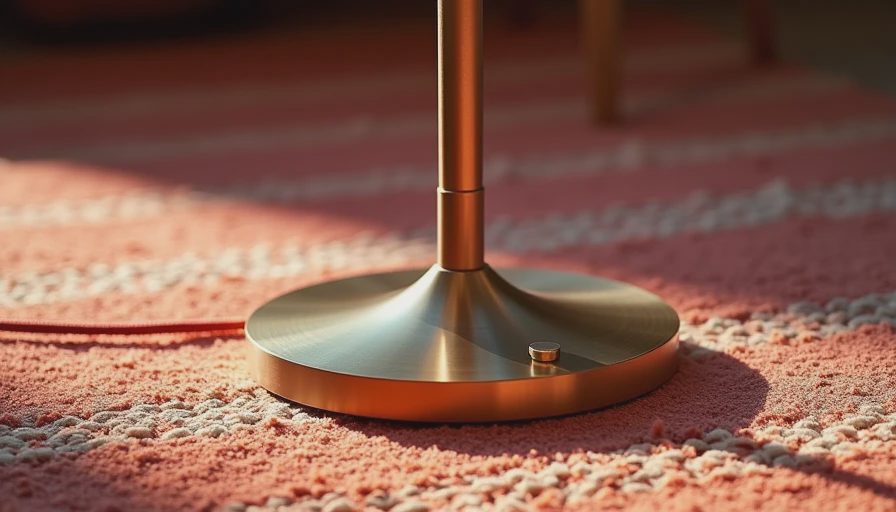
Most floor lamps for living room use fail at the base, not the bulb. A light tube on a skinny tripod looks fine in a showroom and acts stupid when a kid brushes past it or a dog cuts a corner too tight. Heavy steel, cast iron, thick wood, or a broad tripod base all beat a narrow pole with a tiny footprint. A good lamp should feel planted when you nudge it with your foot. If it sways, keep walking.
Check the cord length too. Six feet is workable, eight is better, because nobody wants an extension cord crossing a traffic path. I also like a foot switch or a simple rotary switch because it survives real use. Touch switches can be fine, but some cheap ones die early or get annoying when you want the lamp on without hunting for a sensor in the dark.
Placement that makes the room work
Put the lamp where the room is weak. Beside the reading chair is the obvious move. The less obvious move is the far corner behind the sofa or next to the media console, where it can lift a dark wall and make the whole room feel more finished. Keep the shade out of direct view from the TV if the screen catches reflections. Leave enough space that someone can walk through with a drink without clipping the base. In a tight room, one strong lamp in the right corner beats two cheap ones fighting each other.
If you have a sectional, think about the end seats first. That is where people sit with a book, a laptop, or a phone. If the lamp does not help those spots, you are probably buying for looks and not for the room. That is how people end up with three lamps and still complain the room feels dark.

A simple buying plan by budget
If you are buying this week, shop by use, not by looks alone. Under $75, stick with simple steel or resin bases from Target, IKEA, or Home Depot and pair them with a decent bulb. Between $75 and $150, you start seeing better finishes, heavier bases, and useful dimmers from brands like West Elm, Lamps Plus, or Brightech. From $150 to $300, you can get a lamp that feels stable, looks clean, and will not wobble every time the vacuum goes by. Spend more only if you care about a specific finish or design, because light output tops out fast.
The smartest move is to buy one lamp, test it in the room for a week, and then decide whether the rest of the layout needs another one. A lot of people try to solve every dark corner with the first purchase. That is backwards. Fix the main seating area first, then see what is left.
The mistakes that cost you twice
The expensive mistake is buying the lamp before you know the layout. I have watched people order a giant arc lamp, then realize the ceiling fan, sectional, and walkway all fight for the same patch of floor. I have also seen the opposite: a tiny lamp tucked behind a chair, doing nothing except taking up outlets. Measure the chair height, the side table height, and the clear floor space before you spend a dollar. If you can, turn the lamp on in the store or check the return policy before you bring it home.
When I walk a living room after dark, I can usually tell in ten seconds whether the light plan was thought through or just picked from a sale rack. Good floor lamps for living room use do not scream for attention. They make the room easier to sit in, easier to read in, and easier to live in. If you buy one solid lamp and place it with a purpose, you will use it every night. If you buy it for the picture, you will trip over it by Friday.


No comments yet — be the first to share a thought.