A sectional sofa buying guide should start with a tape measure, not a fabric swatch. I have watched homeowners spend $2,000 or more on a sofa that looked perfect online, then discover it blocked the hallway, covered an HVAC vent, or could not make the turn into the living room. A sectional is a large piece of construction equipment disguised as furniture. Treat it that way, and you will avoid an expensive mistake.
Start with the room, not the sofa
Measure the living room's usable floor area before you look at brands. Record the wall length, ceiling height, door openings, hallway width, stair turns, and the distance from the front door to the final location. Do not measure only the empty wall. Baseboards, radiators, fireplace hearths, windows, floor registers, and built-in cabinets all steal space.
For a typical 12-by-16-foot room, a sectional around 100 to 115 inches wide can work, but the chaise depth often decides whether the layout functions. Leave roughly 30 to 36 inches for the main walking path. Keep at least 18 inches between the sofa and a coffee table so people can sit down without banging their knees. If the room also contains a television, recliner, desk, or toy storage, draw every item on graph paper before ordering.
Make a cardboard outline on the floor with painter's tape. Live with it for a day. Walk around it carrying laundry, a plate, or a vacuum. That test tells you more than a staged showroom photograph. If the outline makes the room feel cramped, the real sectional will make it worse.

Pick a configuration that fits real life
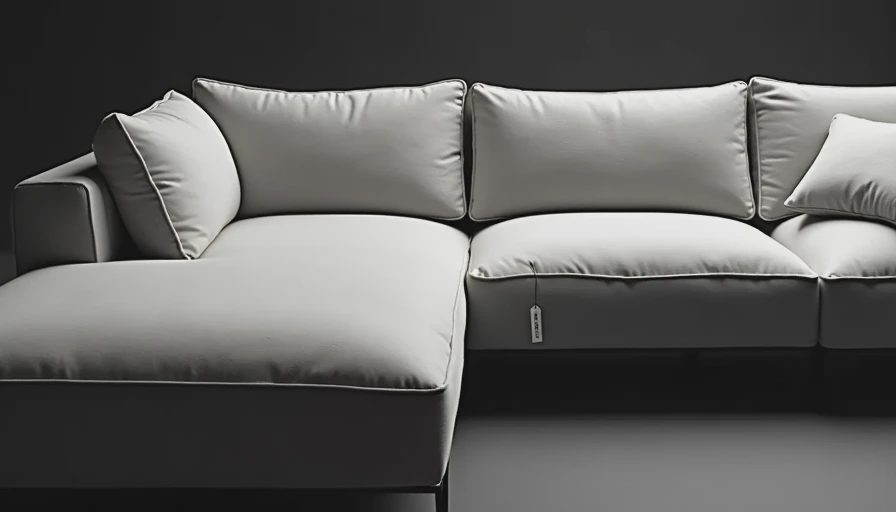
This sectional sofa buying guide is not going to tell you that a left-facing chaise is automatically better than a right-facing chaise. “Left” and “right” can be described from different viewpoints, so confirm the retailer's definition before checkout. Ask for a diagram showing the chaise, arm, corner, and seat dimensions.
A reversible chaise gives you more flexibility, especially in an apartment or a room that may change later. The tradeoff is usually a less tailored frame and a connection point that can shift over time. A fixed chaise often feels more solid but locks the room into one arrangement. A U-shaped sectional provides a lot of seating, though it can consume most of a medium-sized room and make cleaning behind it difficult.
Think about how your household actually sits. If one person stretches out to watch television while another reads, a chaise earns its floor space. If six people regularly sit together, extra seat width matters more than an oversized lounge end. Families with young children should also consider exposed corners, removable cushions, and whether the upholstery can survive crumbs and marker accidents.
Check the frame, suspension, and cushions
The most useful sectional sofa buying guide advice is simple: ask what is inside the frame. Kiln-dried hardwood or a strong engineered wood frame is generally more dependable than thin particleboard in the load-bearing areas. Corner blocks, screwed joints, and reinforced connections are good signs. A frame warranty is useful, but read the exclusions; a ten-year promise on the frame does not mean the cushions or fabric will last ten years.
Seat suspension affects comfort and sagging. Eight-way hand-tied springs are a traditional option, but well-built sinuous springs can perform well at a lower price. Sit on the actual model if possible. Listen for squeaks, press near the front edge, and check whether the seat tilts sharply when you sit down. A cushion that feels soft in a showroom can become a flat spot after heavy daily use.
High-resilience foam wrapped in fiber is a practical choice for most homes. Down or feather blends feel relaxed but need regular fluffing and can develop a casual, rumpled appearance. Loose back cushions are easier to rearrange, while attached backs stay neater but are harder to repair or replace. Ask whether replacement cushions are available before you buy.
Choose upholstery for the mess you have
Fabric ratings are not the whole story in this sectional sofa buying guide. A high abrasion number does not guarantee stain resistance, and a performance label does not make a light-colored sofa invisible to children, pets, or barbecue grease. Look at the weave. Tight, even fabrics tend to resist snagging better than loose boucle or open chenille when dogs, cats, and toy trucks are involved.
Microfiber is forgiving and usually cleans more easily than many textured fabrics. Leather can last for years, but quality varies widely. Top-grain leather generally costs more than bonded leather, which can peel as the surface layer breaks down. Full-grain hides show scratches and variation; that is not a defect, but it is not for someone who wants a perfectly uniform sofa.
Order a fabric sample and put it near the windows, television, and floor. San Antonio sunlight can be harsh, and a warm gray sample may look beige in one room and blue in another. Rub the sample with a clean white cloth, spill a little water, and read the manufacturer's cleaning code. Do not assume a removable cover can go in the washing machine.
Price the entire purchase, not just the tag
A sectional sofa buying guide should include the costs that appear after the advertised price. Entry-level sectionals often start around $700 to $1,200. A better-built midrange model commonly lands between $1,500 and $3,000, while premium leather or custom configurations can run $4,000 to $8,000 or more. Those ranges are useful for planning, not promises from a particular retailer.
Add delivery, assembly, old-furniture removal, fabric protection, taxes, and possible room preparation. Delivery can cost $100 to $300, and a difficult stair carry may cost more. Measure the delivery route yourself. Remove doors only if you understand how to reinstall them, and protect finished floors with moving blankets or hardboard. I have seen a new sectional arrive with no damage to the furniture but a gouged door frame and a scratched wood floor.
Retailers such as Costco, IKEA, Ashley, West Elm, and local furniture stores serve different priorities. IKEA often offers modular flexibility and lower prices, while higher-priced lines may offer more upholstery choices and replacement parts. A local showroom can be worth the visit because you can inspect the frame and sit on several depths in one trip.
Use this order checklist before checkout
This final part of the sectional sofa buying guide is the checklist I would use on a job site:
- Measure every part of the room and the delivery path, including diagonal dimensions.
- Mark the proposed footprint with tape and walk around it for a full day.
- Confirm the chaise orientation in writing, using the retailer's diagram.
- Check seat depth, seat height, cushion fill, frame material, and suspension.
- Order upholstery samples and test them in the room's actual light.
- Read the return policy, restocking fee, warranty, and delivery damage procedure.
- Confirm the final price, estimated lead time, assembly requirements, and removal charges.
Do not let a sale clock rush you into skipping those steps. A sectional is hard to return, expensive to move, and large enough to expose every bad measurement in the room. The right choice will leave clear traffic lanes, accessible vents, comfortable seating, and enough breathing room for the rest of your living room. Measure twice, verify the construction, and only then place the order.


No comments yet — be the first to share a thought.