Choosing a living room floor tile should be a thirty-minute decision, not a three-week spiral. I've installed more of it than I can count and watched plenty of it fail. Here's the thing: the tile itself is only half the story. The other half is the subfloor underneath, the grout between the cracks, and the way your family actually lives in that room. If you get those things wrong, the prettiest tile in San Antonio will crack, shift, or look outdated in two years.
Start With the Subfloor, Not the Showroom
Before you pick a color, pull up the floor plan and figure out what's under your feet. On a wood-framed house, the deflection rating matters more than the tile's pattern. If your floor joists are 2x10s spaced 16 inches on center and span more than 15 feet, you're flirting with flex. Tile wants a rigid surface. When the floor moves, the tile doesn't bend — it cracks. That's why I always check the subfloor thickness too. If you have 3/4-inch plywood with a second layer of 1/2-inch underlayment, you're fine. If you're looking at a single sheet of 1/2-inch OSB, you need to beef it up before any tile goes down. This is the step most homeowners skip, and it's non-negotiable.
Porcelain vs. Ceramic: The Only Comparison That Matters
The marketing departments want you to believe there are a dozen types of tile. There are really two: porcelain and ceramic. Porcelain is pressed harder, denser, and has a lower water absorption rate. That makes it the right call for a living room floor tile if you ever spill a drink or track in wet shoes. Ceramic is fine for backsplashes and guest baths, but it's softer and more likely to chip when you drop a remote or drag a coffee table. For the living room, go with porcelain that's rated PEI 4 or PEI 5 for residential foot traffic. A good one from a Home Depot or Floor & Decor runs anywhere from $1.50 to $5 per square foot. The big-box house brands like TrafficMaster and Hampton Bay are decent for the money, but Daltile and Mohawk give you a wider range of rectified edges and color consistency.
Tile Size and Layout: Bigger Isn't Always Better
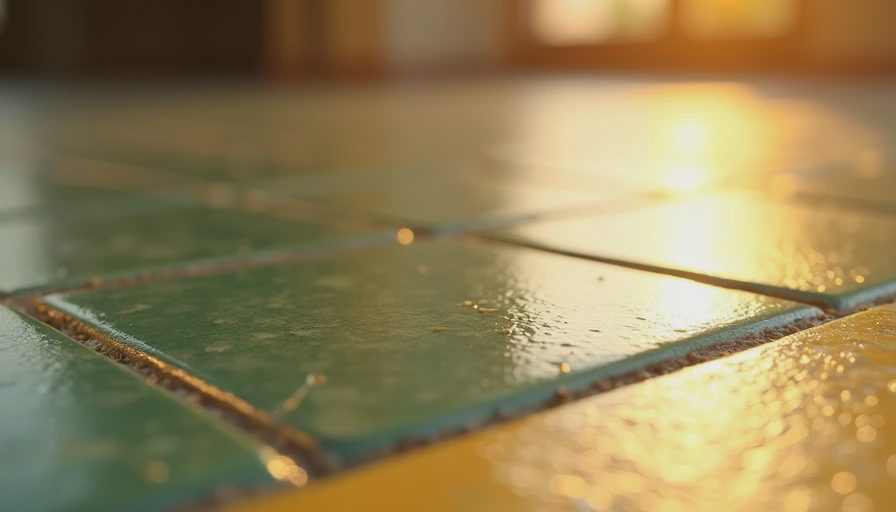
Large-format tile like 12x24 or 24x24 looks clean and modern, but it demands a flat subfloor and a skilled installer. Any hump or dip shows up as a lippage problem — one edge sticks up and catches your sock. If your floor has any visible unevenness, stick with 12x12 or 6x24. The grout lines hide a multitude of sins. Before you settle on a layout, measure the room and the doorway. If you're tiling up to a fireplace hearth or alcove, you'll cut waste. I've seen guys order 10 percent overage and come up short. I always order 15 percent, especially for diagonal patterns or herringbone. You'd be surprised how much of that lands in the cut pile.
Grout Lines, Texture, and the Mistakes I See in Every Reno
Here's where the job goes wrong. People pick a high-gloss tile, then wonder why every shoeprint shows. Satin or matte finishes are the way to go for living room floor tile. The reflection hides the dust and the glare doesn't hit your TV. Grout color is another trap. White grout looks great in the showroom and terrible within a month. Go with an earth tone or gray grout. And keep the grout lines to 1/8 inch to 3/16 inch. Anything wider collects dirt and starts to crumble over time. Use epoxy grout if you can swing it — it's twice the cost but it doesn't need sealing and it laughs at stains.

What a Living Room Floor Tile Job Actually Costs
Let's talk real numbers. A typical living room in a 1990s San Antonio home is around 300 square feet. If you're doing the demolition yourself and hiring a pro for the install, you're looking at a total that breaks down like this. Tear out old carpet or flooring runs $1 to $2 per square foot. Leveling compound and subfloor prep adds another $0.50 to $1.50 per square foot. Tile material for a good porcelain is $3 to $6 per square foot. Install labor will set you back $4 to $8 per square foot. And don't forget grout, sealant, and trim — another $300 to $500 total. Add it up and a 300-square-foot floor runs between $3,000 and $6,000 installed. If you're in a custom build in Alamo Heights with a heated floor and large-format tile, that number can hit $12,000. The place people blow the budget is the transition strips and the trim. It seems like nothing until you're buying 40 linear feet of custom transitions at $8 a foot.
The Bottom Line: How to Choose Without Regret
At the end of a job, the living room floor tile is the one thing your family touches, walks on, and stares at every day. So make the call based on durability, maintenance, and how it feels underfoot. You can argue about style all day, but you can't argue with a cracked tile or a grout line that turns black. Choose a matte porcelain, wide planks or squares, a grout color that's already dirty, and a subfloor that's rock solid. That's the whole secret. It's not glamorous, but it's a floor that'll still look right when you're selling the house ten years from now.


No comments yet — be the first to share a thought.