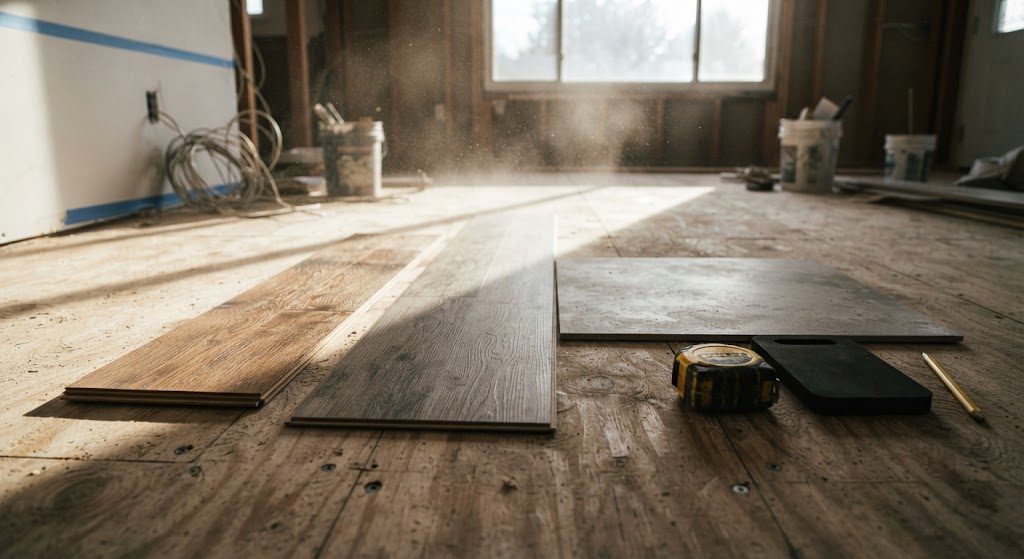
Flooring is the one surface in your living room that takes every punch and still has to look good while doing it. It gets the foot traffic, the spilled drinks, the dog claws, the LEGO landmines, and the afternoon sun that turns a room into an oven. If you get it wrong, you’ll walk on that mistake every single day.
I’ve installed every common flooring type in living rooms across Bexar County. I’ve also ripped out plenty of floors that were wrong the day they went in. Here’s what I know from doing both.
Hardwood Flooring: Beautiful, Timeless, and Not Always the Answer
Solid Hardwood
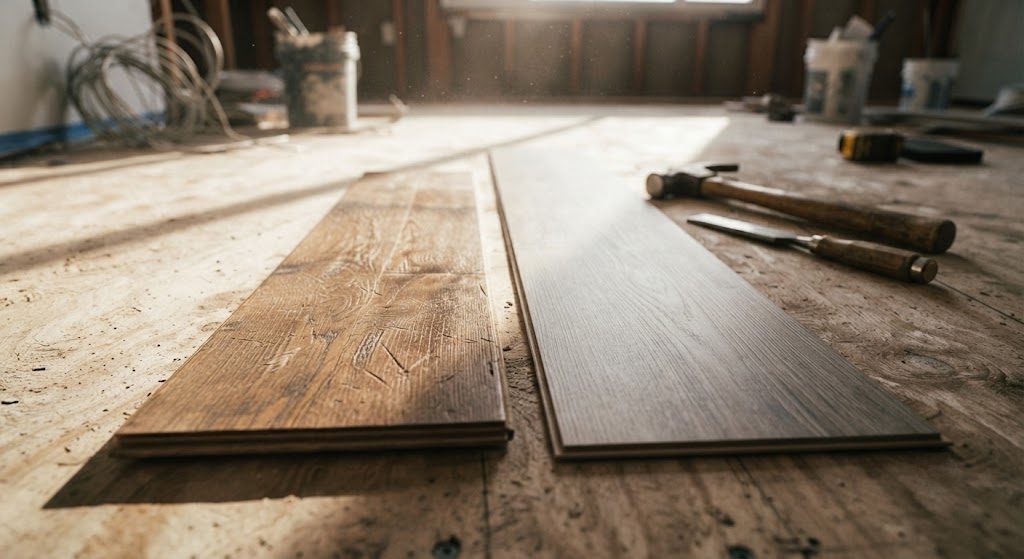
Nothing feels like a real 3/4-inch solid oak or hickory floor under your feet. It can be sanded and refinished three or four times over its life, which means it can outlast you. But in a living room, solid hardwood has two enemies: moisture and sunlight.
In Texas, the humidity swings are brutal. Hardwood expands and contracts with the seasons. If your subfloor isn’t bone-dry and your HVAC isn’t controlling indoor humidity, you’ll get cupping and gapping. I’ve seen brand-new white oak floors look like washboards by August because the installer didn’t acclimate the wood.
It’s also expensive — material and labor — and it scratches. If you’ve got a seventy-pound dog that does zoomies across the room, solid hardwood will show the evidence. Refinishing is a dusty, disruptive job you don’t want to do twice a decade.
Engineered Hardwood
Engineered wood solves the moisture problem with a plywood core that stays more stable. You still get a real wood wear layer, and the better products can be sanded once or twice. It’s what I put in my own house.
It handles minor slab moisture better than solid, which matters on a concrete slab foundation — common in San Antonio. The catch? Cheap engineered flooring has a veneer thinner than a credit card. One deep scratch and you’re looking at a plank replacement, not a sanding.
LVP: The Floor That Took Over for a Reason
Luxury Vinyl Plank has eaten the flooring market alive in the last five years, and I get it. It’s waterproof, scratch-resistant, and installs fast. For a living room that’s going to see kids, pets, and wet shoes from the patio, a good LVP with a thick wear layer — 20 mil or more — is the most practical floor you can put down.
But not all LVP is created equal. The cheap stuff from the big-box store has a thin core, weak locking systems, and a printed pattern that repeats every six planks. I’ve walked into living rooms where you can spot the repeat from the front door. Don't be that guy.
My rule: buy LVP with a stone-polymer composite (SPC) core. It’s denser, handles temperature swings better, and won’t telegraph subfloor imperfections as badly as wood-plastic composite (WPC). And for the love of a quiet floor, put the right underlayment under it.
Tile: Cool Underfoot, Hard on Everything Else
In South Texas, tile makes sense on paper. It’s cool in the summer, indestructible, and immune to water. But in a living room, tile has two big strikes against it. First, it’s hard — your feet will feel it, and anything dropped on it shatters. Second, grout. Grout gets dirty, cracks with slab movement, and is a pain to keep clean in high-traffic zones.
I’ve installed wood-look tile in living rooms and it can look great, but I always tell clients to invest in a good anti-fatigue mat for the areas where they stand. Also, if your foundation moves — and in Texas clay soil, it will — rigid tile will crack before a floating LVP ever shows a seam.
Carpet: There’s One Place I Still Use It
Wall-to-wall carpet in a main living area? Not if you eat popcorn and have a dog. It stains, holds odors, and wears down in traffic paths within two years. I’ve ripped out more living room carpet than I’ve ever installed.
The only exception: a high-quality, low-pile indoor-outdoor rug over a hard surface floor. You get some softness and sound absorption without committing to a permanent sponge for every spill in the house.
What I Put in My Own Living Room
I went with a wide-plank engineered hardwood, hickory, with a thick wear layer and a matte finish. Hickory’s hardness holds up to my kids and the dog. Matte hides scratches better than gloss. And the engineered core stays flat through our San Antonio summers. After three years, it still looks like the day I finished it — and that’s the real test.

No comments yet — be the first to share a thought.