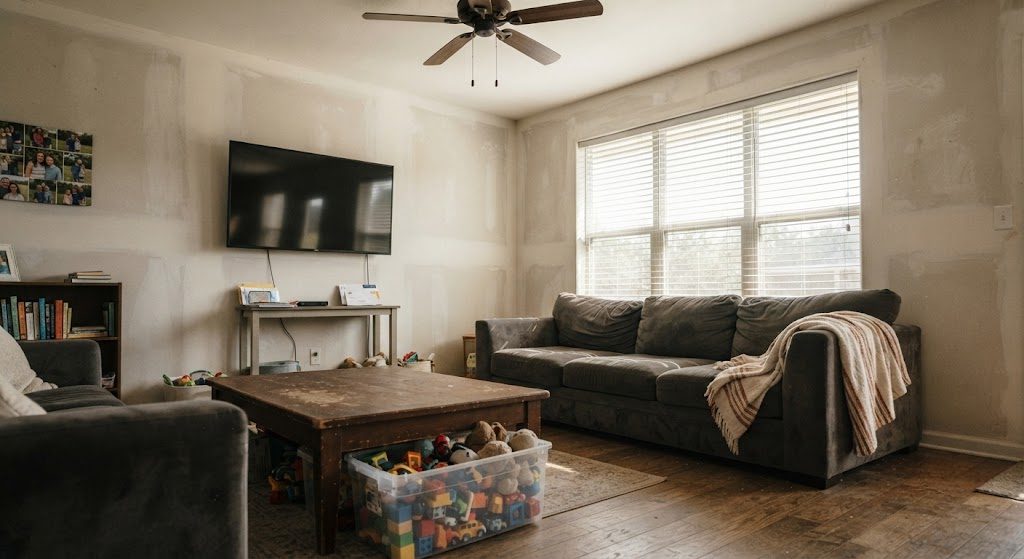
I get it. You’ve been saving photos for months. You’ve got paint swatches taped to the wall and a sofa pulled up on your phone that you’re this close to ordering. You’re ready to make the living room look different.
Here’s the problem: you’re about to skip the five things that determine whether your renovation actually works. I’ve seen it happen too many times — a freshly painted room with a brand-new sectional that blocks the HVAC return, a beautiful floor that squeaks every time you walk across it, a wall-mounted TV with no outlet where it needs to be.
Before you buy a gallon of paint or a single piece of furniture, walk your living room with me and do these five things. It’ll take you an afternoon. It’ll save you a headache you can’t paint over.
1. Check Your Subfloor for Squeaks
Take off your shoes and walk every inch of that floor. Listen for squeaks, creaks, soft spots, and any place the floor feels like it’s moving under your weight. If you’ve got carpet, the noises will be muffled, but you’ll still feel the give.
A squeak means the subfloor isn’t fastened tight to the joists. Over time, the wood dries, the nails loosen, and the plywood starts moving. If you’re laying new flooring on top of that, the squeak doesn’t go away — it just gets more expensive to fix. I’ve had to pull up brand-new LVP because a client swore the floor was fine and it wasn’t. Now I check every time.
Fix it now with subfloor screws driven into the joists. If the subfloor is particle board from a 1980s build and it’s swelling at the seams, you’re looking at replacement. Better to find out now than after the flooring installer leaves.
2. Find Your Studs and Map Them
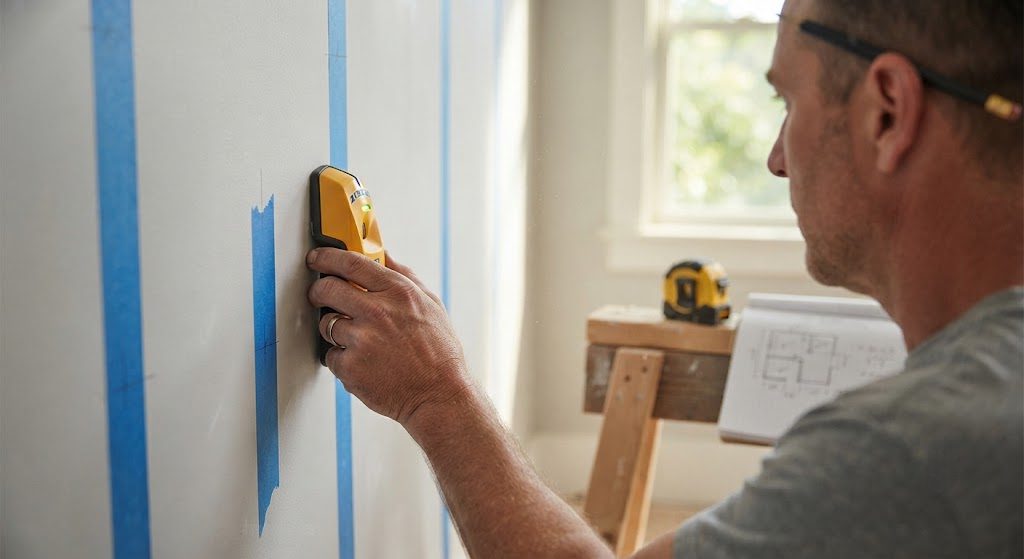
I don’t care what the internet tells you — drywall anchors fail. Especially in a living room where you’re mounting a TV, floating shelves, or a heavy mirror. You need to know exactly where your studs are, and you need to mark them before the furniture arrives.
Grab a stud finder — a decent magnetic one costs twenty bucks — and scan every wall that’s going to hold weight. Mark stud centers with painter’s tape and write the measurement on the tape. Take a photo with your phone. You’ll thank me when the TV mount goes into solid wood instead of drywall dust.
While you’re at it, check the stud spacing. Most homes are 16 inches on center. If yours are 24, you’ll need blocking for anything heavy.
3. Map Every Outlet, Switch, and Cable Jack
Draw a rough floor plan on a piece of paper. Mark every outlet, light switch, cable jack, and ethernet port. Then think about where your sofa, TV, and lamps are going. If the only outlet on that wall is going to end up behind the sofa, you need a plan — either a floor outlet, a power bridge behind the TV, or a different furniture layout.
I’ve walked into living rooms where the client had an extension cord running under an area rug for three years. That’s a fire hazard and a tripping hazard, and it means nobody did this step before they moved the furniture in.
4. Locate Your HVAC Vents and Returns
Your living room needs to breathe. Find the supply vents — the ones that blow air — and the return, the one that pulls air back to the furnace. The return is usually larger and often on a wall near the floor. Now ask yourself: is any piece of furniture about to block it?
A sofa shoved against the return vent chokes your HVAC system and makes the room stuffy. An entertainment center sitting on top of a floor register sends your heated or cooled air straight into the back of a cabinet. I’ve seen it. I’ve fixed it. Move the furniture or move the vent — but don’t pretend it’s not there.
5. Figure Out Which Way the Sun Comes In
This one’s free and takes ten minutes. Spend a full day at home and watch how the light moves through your living room. Which windows get direct sun? At what time? In South Texas, a west-facing window in August is a heat gun. In a north-facing room, you’re fighting gloom all winter.
The sun path determines where you put the TV — because glare ruins a football game — and what kind of window treatments you need. It also tells you which walls are going to bake that beautiful velvet sofa you’ve been eyeing. Do this step now. Fading fabric and screen glare are problems you can prevent, not fix.
Do these five things this weekend. Then, and only then, go look at paint colors. The foundation comes first. The pretty stuff comes last.


No comments yet — be the first to share a thought.