Living room floor rugs are not just something you throw down after the sofa arrives. They affect how furniture sits, how doors swing, how sound travels, and whether your hardwood survives the next five years. I have watched homeowners spend $3,000 on flooring, then drag a cheap rug across it with a rough backing that leaves marks everywhere. The rug is part of the floor system, so choose it after you understand the room.
Start with the room's traffic pattern. Measure from the main entry to the hallway, then mark the path people actually use. Leave a clear walking lane of about 30 to 36 inches. A rug that pinches that route will get kicked, folded, and eventually shoved against a wall. That is not a style problem. It is a layout problem.
Get the rug size right before shopping
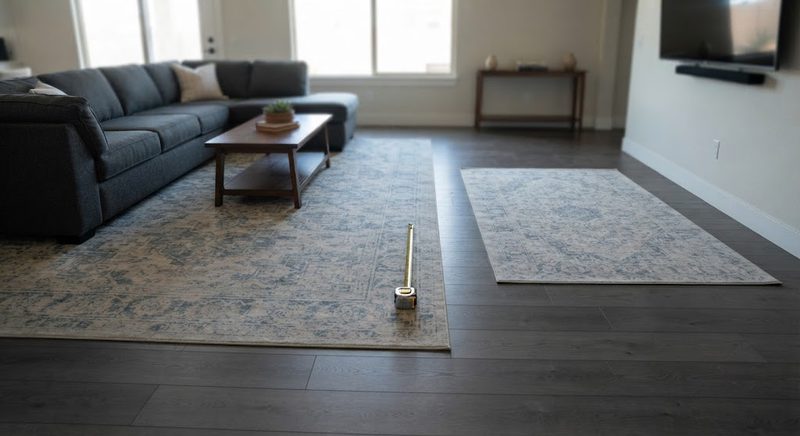
The most common living room mistake is buying a rug that is too small. An 8-by-10 rug often works in a medium room, while a 9-by-12 gives a sectional and two chairs enough room to sit together. In a compact apartment, a 5-by-7 can work, but keep the front legs of the sofa on the rug. A tiny rectangle floating in front of the furniture makes the room look disconnected and creates a trip edge.
Measure the furniture footprint, not just the open floor. For a sofa, you generally want at least the front legs resting on the rug. With a sectional, the rug should reach under the inside corner rather than stopping several inches short. For a seating group with four legs, use a large enough rug to hold every leg if the room allows it. If the budget does not allow a 9-by-12, place the sofa legs on an 8-by-10 and keep the chairs close enough to share that surface.
Before ordering, put painter's tape on the floor at the rug's proposed corners. Leave the tape there overnight. You will notice problems that a quick measurement misses, including a cabinet door that cannot open or a floor vent that gets covered. Living room floor rugs should organize the furniture, not fight it.

Choose a material that matches the abuse
Wool is the reliable workhorse. A good wool rug handles foot traffic, resists crushing better than many synthetic options, and can last for decades when maintained. The price is real: an 8-by-10 wool rug commonly runs from $600 to more than $2,000. If you have children, pets, or a snack-heavy TV room, that durability can justify the cost.
Polypropylene is usually cheaper, often between $150 and $700 for an 8-by-10, and it handles spills without the panic that comes with an expensive natural fiber. It is a sensible choice for rentals, play areas, and homes where muddy shoes are a regular event. Polyester can have bright colors and soft texture, but it tends to show crushing and oily traffic sooner.
Jute and other plant fibers look sturdy, but they are not magic. They can shed, feel rough under bare feet, and stain permanently when liquid sits in the weave. I would not put one beside a dining table or in a house with a dog that tracks in wet dirt. Cotton flatweaves are easier to wash, but they slide unless you install a proper pad underneath.
For living room floor rugs, inspect the backing before admiring the pattern. A rough latex backing can discolor certain finishes, especially older hardwood and some luxury vinyl plank. Ask whether the manufacturer approves the rug for your floor, and use a pad designed for that surface.
The rug pad is not optional
A pad keeps the rug from creeping, reduces noise, and protects the floor from grit trapped underneath. It also makes a thin rug feel less like a towel laid over concrete. For a flatweave, use a thin non-slip pad. For a thicker wool rug, a felt-and-rubber combination gives better cushioning without letting the rug wander.
Do not use a rubber shelf liner as a substitute. It can stick to finishes, crumble in heat, and leave a pattern behind. In San Antonio, where rooms can get hot from afternoon sun, cheap materials show their weaknesses quickly. A quality 8-by-10 pad may cost $80 to $200, but replacing a damaged finish costs far more.
Trim the pad two inches inside the rug on every side. An oversized pad creates a raised edge that catches toes and looks sloppy. Vacuum the floor before installation, then check the pad after a week. If it has shifted, the problem is usually the pad material, not the rug.
Protect hardwood, tile, and vinyl flooring
Hardwood needs space to breathe and a clean surface underneath. Grit acts like sandpaper when a rug moves over it. Vacuum both the floor and the rug regularly, and lift the rug every few months to inspect for moisture, discoloration, or trapped debris. Do not leave a wet rug on wood while hoping it will dry on its own.
Tile is tougher, but grout lines can telegraph through a thin rug and make it feel uneven. A dense pad helps. On luxury vinyl plank, follow the flooring manufacturer's guidance because some rubber or PVC backings can react with the wear layer. Felt-backed living room floor rugs are often safer, but the product label still matters.
Sunlight is another quiet problem. A rug can protect one section of flooring while the exposed area fades around it. Close blinds during the strongest afternoon sun, especially in a room with dark hardwood or stained concrete. Rotate the rug every few months so wear and light exposure are distributed.
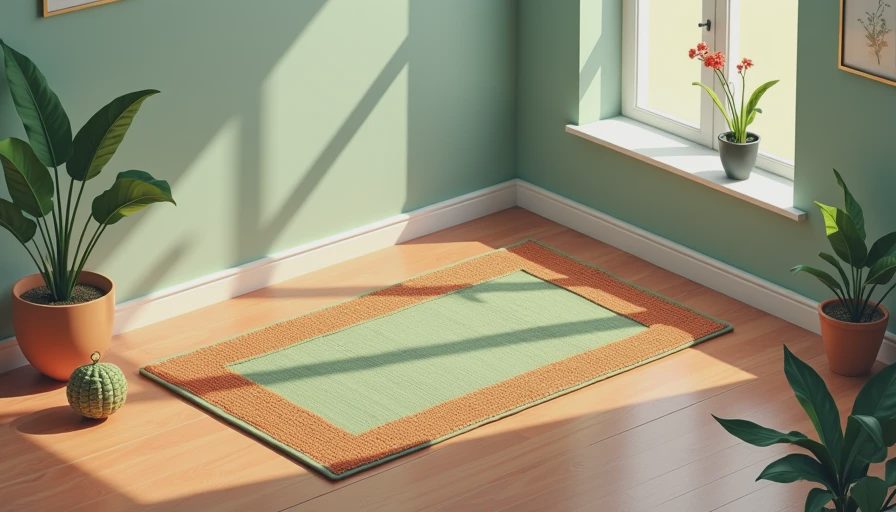
Placement problems I see on real jobs
The first failure is a rug that stops six inches in front of the sofa. It creates a visual gap and gives every chair a reason to drift away from the group. The second is a rug pushed against the wall because the homeowner wanted to cover more floor. That can make the room feel smaller and may block baseboard heaters or floor vents.
Leave a visible border of flooring around the rug when the room permits it. Twelve to 24 inches is a useful starting point, but doors, vents, and furniture matter more than a rigid rule. Never let a rug interfere with a door swing. If the door scrapes, trim the rug only if the material allows it; otherwise, buy a better size.
For an open living and dining area, use separate rugs to define each zone. They do not need to match exactly. Similar weight and a related color family are enough. Keep the edges aligned with the furniture rather than with an arbitrary tile line.
A buying plan that prevents expensive mistakes
Measure twice, tape the outline, and photograph the room from the doorway before shopping. Record the sofa width, chair depth, door clearance, vent locations, and the distance from the television to the seating. Then set a total budget that includes the pad and delivery. A $300 rug that needs a $150 pad is a $450 purchase, not a $300 purchase.
Look at samples in morning and evening light. Beige can turn yellow beside warm bulbs, while gray can look blue next to daylight. Check the pile with your hand and bend a corner to see whether the backing cracks. If an online listing gives no fiber content, backing information, or care instructions, skip it.
Brands such as Ruggable focus on washable layered systems, while retailers including IKEA, Lowe's, Home Depot, and boutique flooring stores carry different price and construction levels. Washable does not mean indestructible; confirm that the washer can handle the actual rug size and that the base will not curl.
The right living room floor rugs should sit flat, hold the seating group together, and survive the way your household actually uses the room. Spend first on correct size and a proper pad, then choose the pattern. A beautiful rug in the wrong place is still a repair call waiting to happen.

No comments yet — be the first to share a thought.