The right area rug layout living room plan starts with furniture, traffic, and floor protection—not a picture you saved online. I have watched homeowners spend $600 on a rug, drag it into place, and discover that two sofa legs sit on it while every chair floats six inches away. That is not a design mystery. It is a measuring problem.
A living room rug has three jobs. It anchors the seating, protects the floor from chair legs and grit, and makes the room easier to use. Get the size wrong, and the room feels chopped into separate pieces. Get the placement right, and even ordinary furniture looks like it belongs together.
Measure the room before you shop
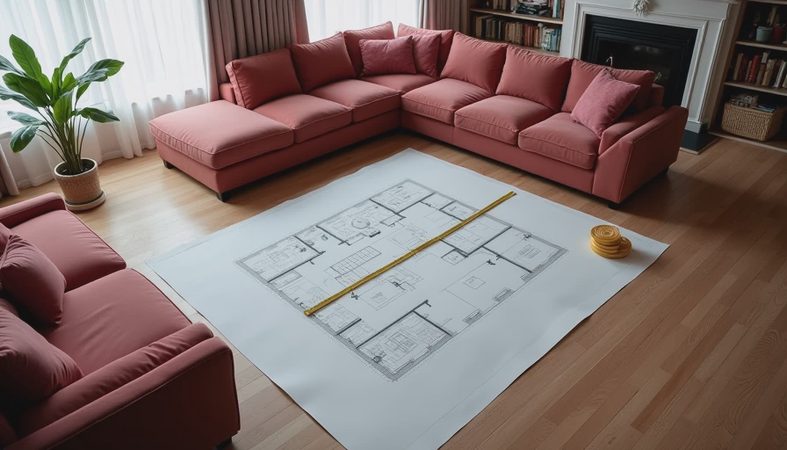
Start with a tape measure, not a rug website. Measure the usable seating zone from the front edge of the sofa to the back legs of the chairs. Ignore built-in bookcases, fireplaces that project into the room, and walkways that need to stay clear. In a typical 12-by-16-foot living room, the seating zone may only need a 9-by-12-foot rug, while the full room does not.
Mark the proposed rug with painter's tape. Use the actual furniture footprint, including the extra depth of a recliner when it is open. Leave roughly 30 to 36 inches for a main walking path. In smaller rooms, a 24-inch path can work, but it will feel tight when someone carries a laundry basket or a child runs through with a toy.
Measure the doorway and stair turn before ordering. A rolled 9-by-12-foot rug can be awkward, and a thick pad adds bulk. I have seen a sectional fit through a front door while the rug could not make the turn into the room. That is an expensive mistake caused by skipping five minutes of measuring.
The three layouts that actually work
The most reliable area rug layout living room arrangement puts all major seating on the rug. The sofa, chairs, and coffee table sit fully inside its borders, with enough rug showing around the outside to create a clear frame. This usually requires an 8-by-10-foot rug in a modest room or a 9-by-12-foot rug for a larger seating group. It costs more, but the result is stable and comfortable.
The second arrangement puts only the front legs of the sofa and chairs on the rug. This is the practical choice for many homes because it works with an 8-by-10-foot rug without forcing the room to buy a 9-by-12. The front legs should sit at least 6 to 12 inches onto the rug. If only the sofa touches it and the chairs sit completely outside, the furniture will look scattered.
The smallest workable option places the coffee table and part of the sofa on the rug while the chairs remain off it. Use this only when the room is narrow or the budget is limited. Keep the table centered over the rug and make sure the front sofa legs touch it. Otherwise, you have a rectangle floating in the middle of the floor with no job to do.
Choose the rug size by furniture, not room label
An 8-by-10-foot rug is the workhorse for a small or average living room. It can support a standard three-seat sofa, one or two accent chairs, and a coffee table. A 5-by-8-foot rug is usually too small for that group. It may look acceptable in a product photo, but in a real room it leaves the sofa and chairs disconnected.
A 9-by-12-foot rug gives you more room for a deep sofa, two chairs, or a sectional. If your sofa is 90 inches long and the chairs are positioned at angles, the larger rug prevents the front legs from hanging over the edge. For a large sectional, measure from the outside arm to the chaise end before selecting anything. An 8-by-10-foot rug often disappears underneath a wide L-shaped sofa.
Round rugs have a narrower use. They work under a round coffee table or in a small reading corner, but a 6-foot round rug rarely anchors a full seating group. Rectangle rugs are easier to line up with walls, floorboards, and rectangular furniture, which is why I use them on most jobs.
Keep traffic, doors, and vents clear
The best area rug layout living room setup does not block a door swing or cover a floor register. Mark every door arc before placing the rug. A rug that catches under a bathroom door will curl, bunch, and eventually become a trip hazard. Keep the leading edge away from the threshold unless the door has enough clearance.
Check heating and cooling vents as well. Covering a central floor register can restrict airflow and discolor the rug pad from heat. If the vent sits under the sofa, use a proper register deflector rather than crushing the opening with furniture. In older San Antonio houses, uneven floors and supply vents are common, so I also check for rocking furniture before blaming the rug.
Tape the corners for a day before committing. Walk the room at different times, carry a basket through it, and open every nearby cabinet or door. A layout that looks fine at noon may become a nuisance when the television is on and people are moving around after dinner.
Pick the pad and material for actual use
A rug pad is not optional on hard flooring. It keeps the rug from sliding, protects wood or laminate from grit, and adds enough cushioning to reduce edge curling. For most living rooms, a dense felt-and-rubber pad is a better choice than a thin foam sheet. Do not use a rubber pad that leaves a sticky residue on finished wood.
For children, pets, or frequent snacks, low-pile polypropylene is easier to clean than a delicate high-pile wool rug. Wool feels better underfoot and can last for years, but it needs more careful cleaning and costs more. A washable rug can make sense in a small seating zone, although the backing and seams still need inspection after washing.
Color matters less than construction. A medium pattern hides crumbs and dust better than a solid cream surface. In my own house, the rug near the sofa has to survive kids, shoes, and weekend barbecue traffic from the patio. A beautiful rug that requires everyone to tiptoe is the wrong purchase.
A final installation check
Before the rug arrives, clean the floor thoroughly and repair any loose transition strip. Place the pad first, then unroll the rug and let it relax. Do not judge the final position while the corners are still curled. Center the coffee table, set the sofa and chairs according to the taped plan, and check that every seating position has at least one solid rug connection.
If you are comparing an area rug layout living room option, take photographs from the doorway and from the sofa. The doorway view reveals crooked alignment with the walls, while the seated view shows whether the furniture feels connected. A $20 roll of painter's tape can save a $500 return, a delivery fee, and several hours of moving heavy furniture.
The best area rug layout living room solution is the one that supports how your household actually moves. Measure first, protect the walking paths, size the rug to the furniture, and spend money on a proper pad. Those steps matter more than a trendy pattern or a staged photograph. When the rug is doing its job, nobody notices the layout. They simply sit down, put their feet up, and stay awhile.


No comments yet — be the first to share a thought.