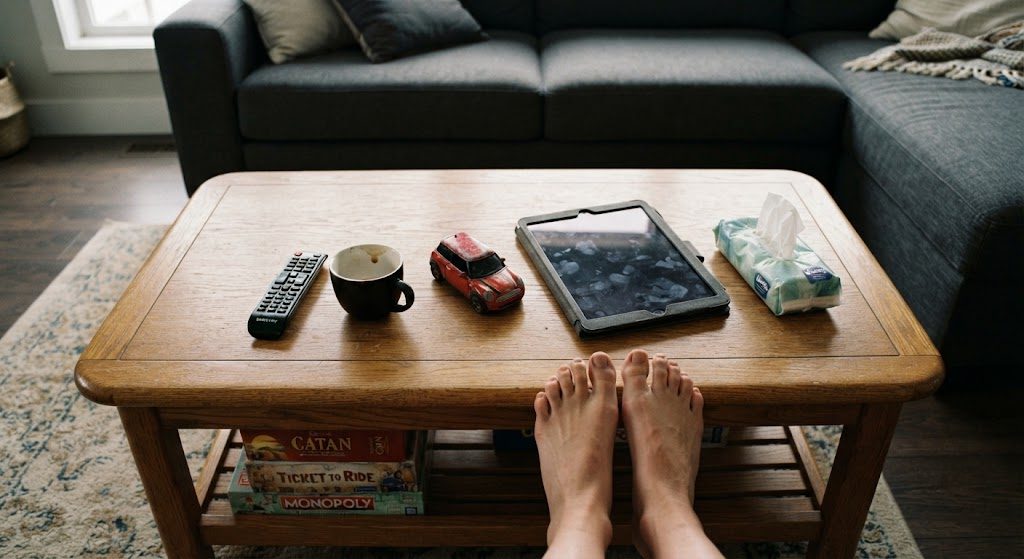
I've seen a $900 glass coffee table shatter because a kid dropped a toy car on it from sofa-height. I've seen a beautiful reclaimed-wood table with sharp corners leave a scar on a toddler's forehead. And I've sat in living rooms where the only side table was on the wrong side of the sofa, so every drink ended up on the floor.
Horizontal surfaces are the workhorses of a living room. They catch everything. The design catalogs show a coffee table with a single art book and a vase. Real life puts six different objects on it by Tuesday. If you pick your tables based on how they look in a showroom, you'll regret it the first time someone puts a wet glass down and the finish turns white. Here's how to pick tables that survive your actual life.
The Coffee Table: The Center of Everything
Height: Match the Sofa Seat, Not Your Aesthetic
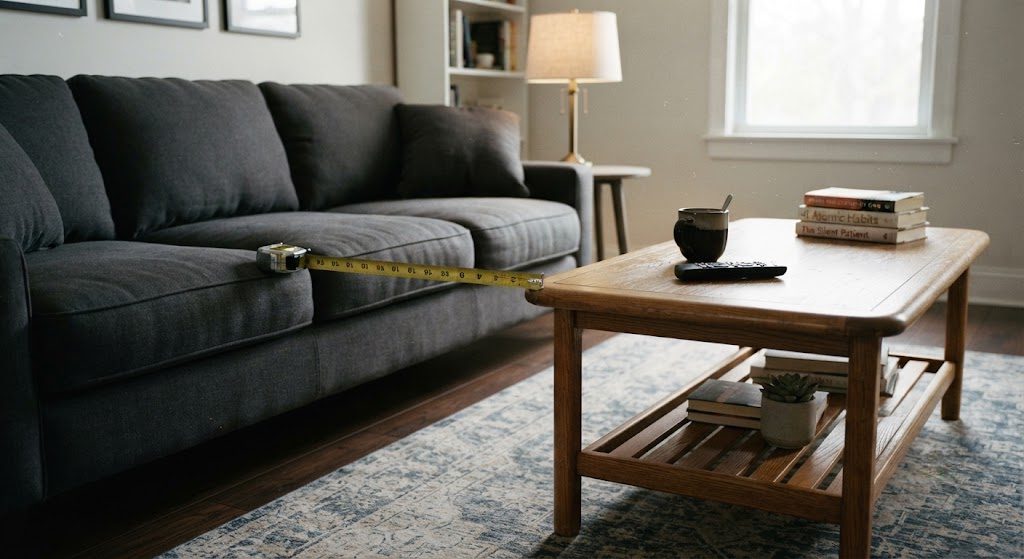
A coffee table should sit level with the top of your sofa cushions, or one to two inches lower. If your sofa seat is 18 inches off the floor, your coffee table should be between 16 and 18 inches tall. Higher than the seat, and it feels like you're reaching up to set a drink down. Lower than 14 inches, and you're bending forward every time you need the remote. Most standard coffee tables run 16 to 18 inches, which works for most sofas. Measure your actual sofa before you buy — don't guess.
Size: Leave Room to Walk, Not Just to Sit
The coffee table should be roughly two-thirds the length of the sofa. A 90-inch sofa pairs with a 50- to 60-inch coffee table. More importantly, leave 12 to 18 inches between the edge of the table and the front of the sofa. That gives you enough room to walk, to stretch your legs, and to pull the vacuum through without moving the furniture. Less than 12 inches and you're squeezing past sideways. More than 18 inches and you can't reach your coffee without standing up.
Material: Pick One That Can Take a Hit
Wood is my go-to. Solid hardwood with a durable finish handles moisture, heat, and impacts. Soft woods like pine dent easily. Look for oak, maple, or hickory — or a good veneer over a solid core. Avoid anything with a high-gloss lacquer finish unless you want every scratch and fingerprint memorialized.
Glass looks clean and airy until it doesn't. It shows dust the moment you stop wiping it, it rings like a gong when you set a mug down, and tempered glass can still shatter if hit at the edge. I've talked more clients out of glass coffee tables than I can count. If you must have it, buy a table with a thick tempered top and rounded corners.
Stone and concrete are indestructible but heavy enough to crack floor tile if dropped during a move. They also chip mugs and plates when you set them down too hard. I use stone-top side tables outdoors. In the living room, they're overkill unless the rest of your furniture is equally massive.
Upholstered ottomans with a tray on top give you dual-purpose: feet up or drinks down. Remove the tray and it's extra seating. This is the most flexible option, and it's what I have at home.
Corners: Round Them If You Have Kids
A square-edged table at toddler-head height is an emergency room visit waiting to happen. I've got rounded corners on every table in my living room. It's not a design choice — it's a scar-avoidance strategy.
Side Tables: One Per Seat, Within Arm's Reach
Every seat in the room needs a surface within easy reach for a drink, a phone, or a book. That doesn't mean a full side table next to every cushion, but it means at least one surface for every seating position. A sofa with three seats needs at least two side tables, one at each end. If someone is sitting in the middle, they get the coffee table.
Nesting tables and C-shaped tables that slide under the sofa are great for smaller rooms where a full side table would crowd the walkway. They tuck away and pull out when needed. I've used C-tables on jobs where the sofa had no room for end tables, and they work — just make sure the base is heavy enough that it doesn't tip when you lean on it.
What I Have in My Own Living Room
I went with a large rectangular wood coffee table — oak, 52 inches long, 18 inches tall, rounded corners — and a matching end table at each side of the sofa. The coffee table has a lower shelf that holds board games and a basket for remotes. Total cost was around $400 for all three pieces, bought unfinished and sealed with three coats of satin polyurethane. After three years of feet, spills, and LEGO construction, they're still solid. The poly took the abuse and I can recoat it anytime.
Don't buy a coffee table that's too pretty to use. Buy one that can handle your life and look good doing it.
No comments yet — be the first to share a thought.